
How Blighter’s FMCW E-Scan Radars Are Safeguarding Coasts and Offshore Platforms 

The world’s coastlines and offshore platforms are under increasing pressure from piracy, smuggling, territorial incursions, and even environmental threats. Yet traditional coastal surveillance radars often overlook what happens close to the shore, leaving critical gaps in situational awareness where covert threats are most likely to emerge.  

As nations and operators seek smarter ways to protect their maritime borders and energy assets, radar technology is evolving to meet these challenges head-on.  

At the forefront is Blighter’s FMCW e-scan radar, designed to detect, track, and classify even the smallest threats in the harshest maritime conditions. Unlike conventional systems, Blighter’s radars are engineered specifically to detect ground and near-surface targets close to the coast and around offshore infrastructure, the very threats traditional rotating radars often miss.  

Here, our Radar Systems Engineer, Dr. Rakeeb Jaufer, explains how this innovative radar technology is redefining maritime security and why it’s so critical today.  

The Problem: Conventional Radars Miss What Matters Most

Most coastal surveillance networks rely on traditional mechanically rotating radars designed for long-range detection of moving vessels. While effective offshore and at ultra-long distances, these systems struggle with close-to-shore, low-RCS, or slow-moving targets, such as small boats, RIBs, and unmanned surface vessels (USVs), operating effectively ‘under the radar’.  

This leaves a vulnerability in the nearshore domain, one that has become exploited in recent years, as seen in multiple incidents worldwide involving small craft incursions and smuggling operations.  

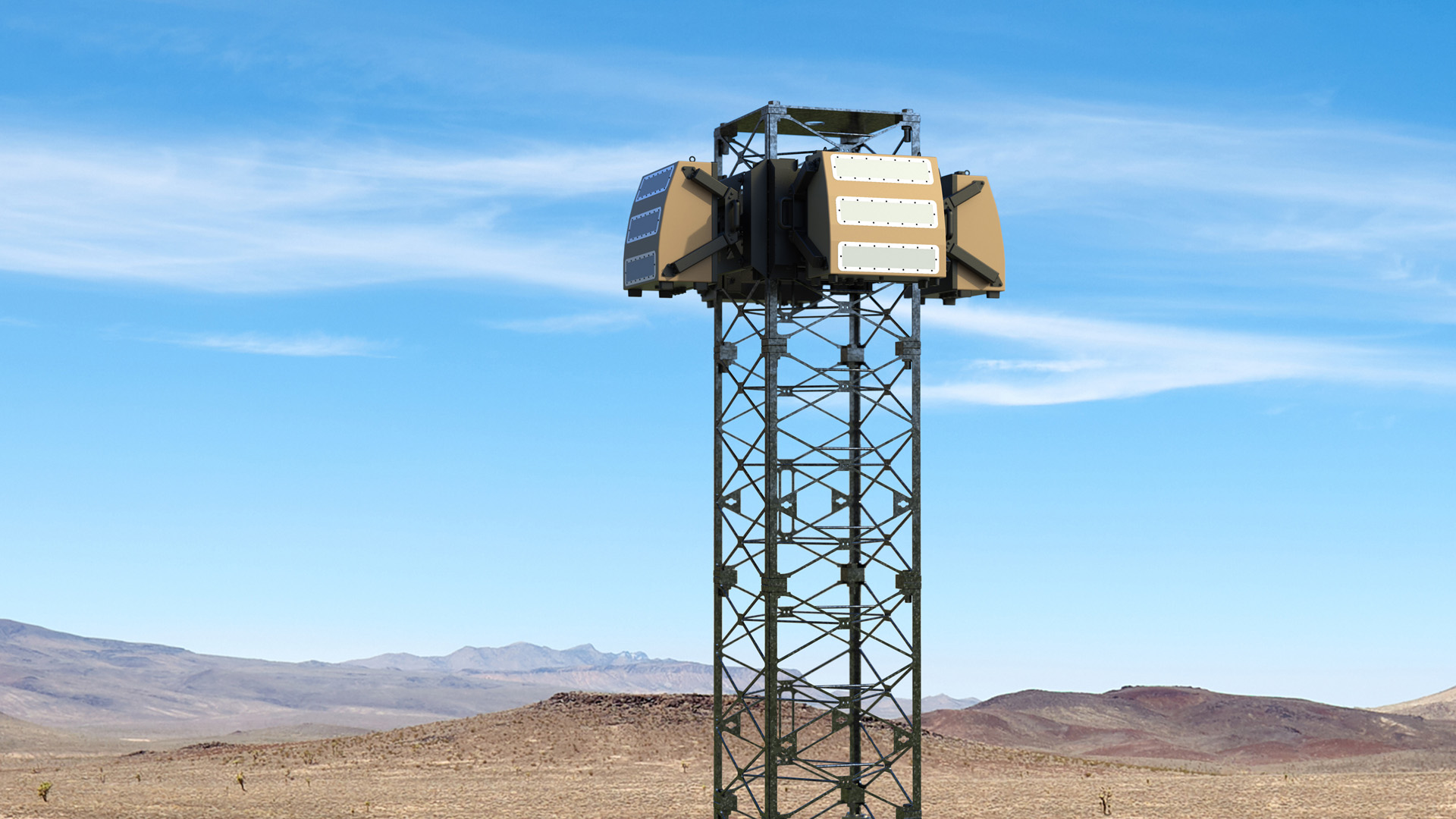
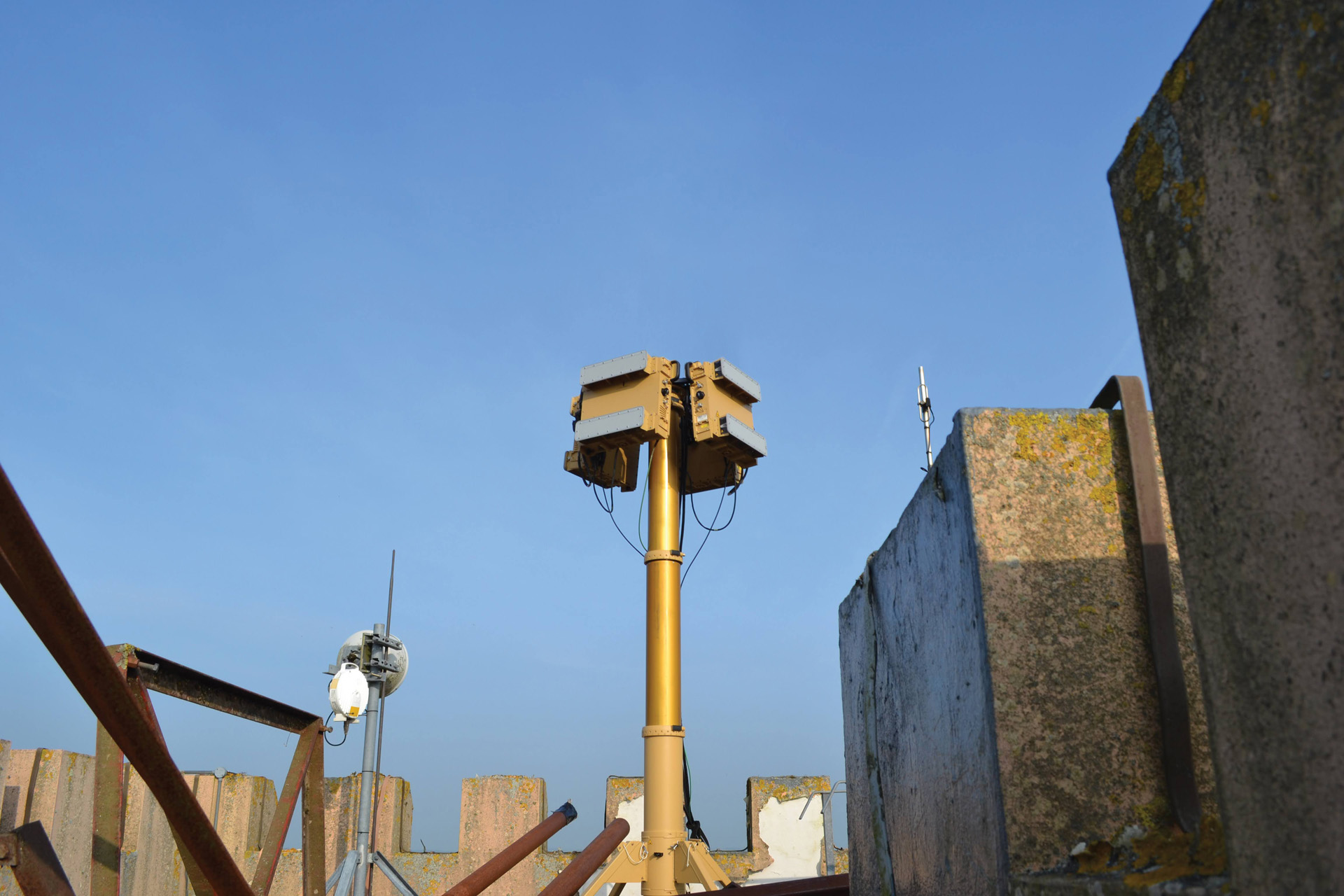
Blighter’s C400 FMCW e-scan radar was developed specifically to plug this gap, providing a complementary layer beneath traditional coastal radars, with the ability to detect and track difficult to see targets close to the surface, even in highly cluttered maritime environments.  

What makes FMCW E-Scan Radar Unique?

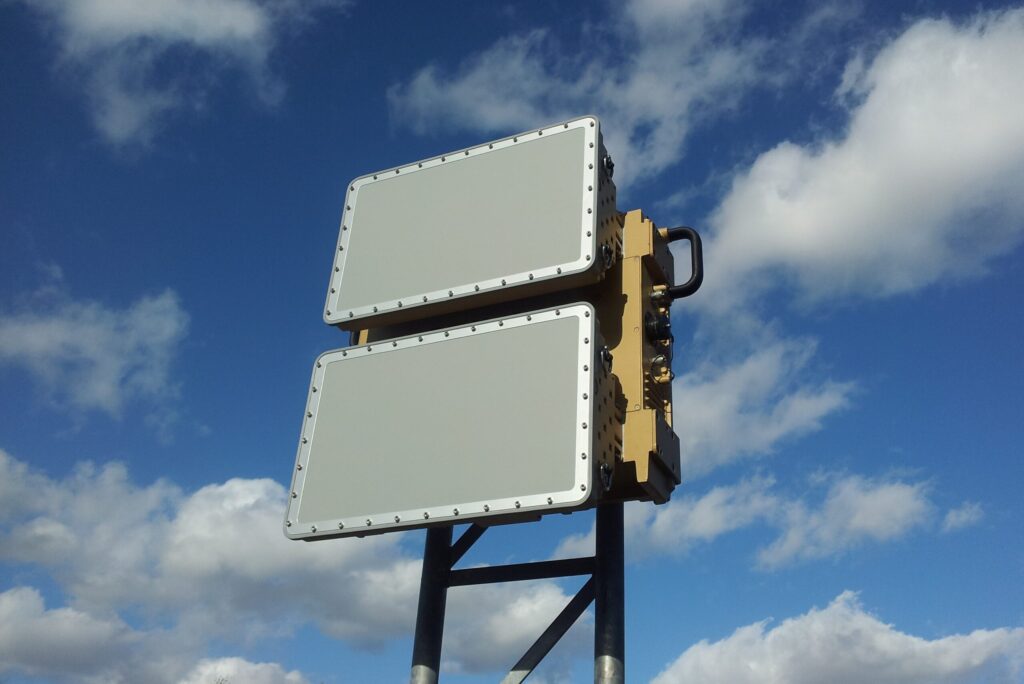
Blighter’s FMCW e-scan radars use frequency-modulated continuous waves (FMCW) signals to measure range and velocity precisely and in real time, while electronically steering beams without any mechanically moving parts. They differ from traditional radars by scanning instantly across wide-areas, offering silent, solid-state operation at very low operating power.  

The result is a radar that is faster, quieter, and more durable than traditional rotating systems, with the capability to track multiple fast, stealthy targets simultaneously with unwavering precision. 

Why is Coastal and Offshore Surveillance So Challenging?

Coastal and offshore environments present significant challenges for radar systems. Sea clutter, wave motion, humidity, and platform movement all create reflections and Doppler noise, making it difficult to detect small, slow covert targets against a constantly shifting background. 

Power availability and maintenance access can also be limited, particularly on offshore installations or at remote coastlines. Blighter radars address these challenges directly, and their high MTBF (up to 250,000 hours) is proof of their reliable performance in even the most demanding settings.  

Dispelling the Radar Myths

A common misconception is that radar systems can ‘see everything’, regardless of sea conditions. In reality, detection performance depends heavily on advanced signal processing and intelligent clutter suppression.  

Blighter’s radar systems apply adaptive algorithms that filter out sea clutter, enhance true target signals, and automatically adjust to environmental changes. This fine tuning enables reliable target tracking even in complex maritime conditions where conventional pulse radars struggle.  

Why Coastal and Offshore Security Matters More Than Ever

The maritime domain is a critical intersection of national security, commerce, and energy infrastructure. For offshore platforms, pipelines, shipping lanes and coastal borders, maintaining 24/7 situational awareness has never been more important.  

Blighter’s radar systems are helping nations and operators strengthen this maritime layer of security, ensuring the early detection of illegal activities, illicit incursions, and environmental threats before they escalate.  

Reliability Built for the Elements

From salt spray, dense fog and rain to extreme temperatures, Blighter radars are engineered for endurance. Solid-state design, automatic calibration, and adaptive algorithms ensure stable performance in all weather and climates.  

Built-in self-testing and environmental compensation mechanisms continuously optimise the radar’s operation, maintaining accuracy through rain, dense fog, and rough sea states.  

Detecting the Undetectable

In real-world deployments, Blighter radars have detected small kayaks at distances beyond 3km (RCS ~ 1.5m²), and even further when conditions are not obscured by heavy wave clutter. In these scenarios, traditional radars typically fail. This performance is achieved through the high-gain e-scan antennas, FMCW waveforms, and proprietary signal processing algorithms that isolate true targets from background interference.  

Seamless Integration with Wider Security Systems

Blighter radars integrate easily with command-and-control (C2) and sensor fusion systems via Ethernet, TCP/IP, and fiber optic protocols, delivering real-time plot data, GPS coordinates, and system health information.  

This interoperability enables operators to fuse radar feeds with electro-optical, thermal, and acoustic sensors, forming a unified maritime security network capable of real-time situational awareness. Ideal for rapid decision-making and response coordination.  

Deployment Example: Offshore Platform Security

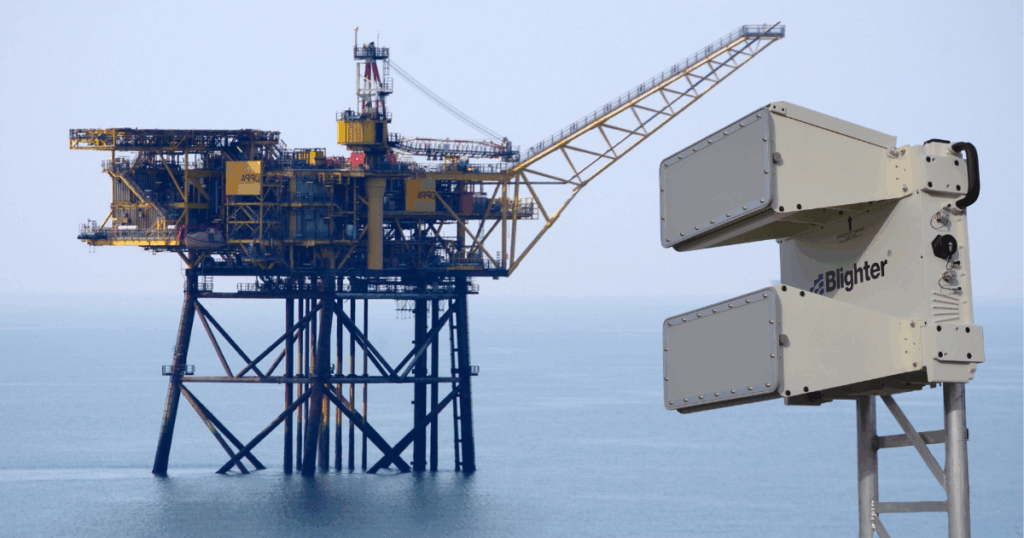
In a recent offshore deployment, Blighter’s radar technology was used to secure an oil and gas platform, providing 360° detection, tracking and classification of small craft approaching from multiple directions. Operating continuously in difficult conditions with high levels of sea clutter, the system successfully distinguished between wave motion and small boat activity, giving operators critical early warning and response times.  

Read more here.

The Future of Maritime Threats

As maritime threats evolve, from stealth boats and autonomous vessels, to coordinated swarm attacks, radar technology must keep pace. The future lies in AI-based automation, target classification, 3D beamforming, and networked sensor grids to maintain situational awareness and sensor fusions.  

One aspect of Blighter’s radar technology I find most impressive is its precise detection capability, along with its ability to identify small, covert, and low cross-section (RCS) targets that often go unnoticed by other radars. This is achieved through advanced RF architecture and sophisticated signal processing techniques. With non-mechanical beam steering, the system ensures low maintenance and consistently high performance, even in challenging weather conditions, including dense fog.  

Working on this technology is truly exciting, as it brings together physics, RF, Signal Processing, software engineering, sensor fusion, data science and defence innovation, to push the boundaries of radar sensing. By further integrating AI and signal intelligence, it paves the way for a new era in radar technology making environments safer, smarter, and more responsive than ever before.  

About Dr Rakeeb Jaufer

Dr. Rakeeb Jaufer is the key Radar Systems Engineer at Blighter and an accomplished applied researcher with a PhD from the University of Nantes, France. His academic and professional expertise lies in Radar technology, Signal Processing, and Artificial Intelligence (AI). Prior to joining Blighter, he held postdoctoral research positions at Queen Mary University of London and the University of Sheffield, where he specialised in Synthetic Aperture Radar (SAR), Sonar, and advanced radar signal and image processing. Dr. Jaufer’s skill set spans hardware and software prototyping, algorithm development, and simulation, underpinned by a strong command of AI and data science. 
 

You may also be interested in:

DSEI 2025: Putting Integrators First with Enhancements to Border & Coastal Surveillance Radars & AI-Assisted Software

CAMBRIDGE, UK, August 27, 2025 – A pioneering designer and manufacturer of ground-based smart electronic-scanning micro-Doppler radars, Blighter is showcasing new developments to its border surveillance and coastal security radars, and its AI-assisted BlighterNexus software at this year’s DSEI Defence and Security show. DSEI takes place at the Excel Centre in London, September 9-12, 2025. Blighter will be on stand number N6-166. 

Following a record £25m order book in the last financial year, Blighter is continuing to consolidate its leadership in border surveillance and coastal security by focusing on product innovation to support its defence customers and systems integrator partners.  

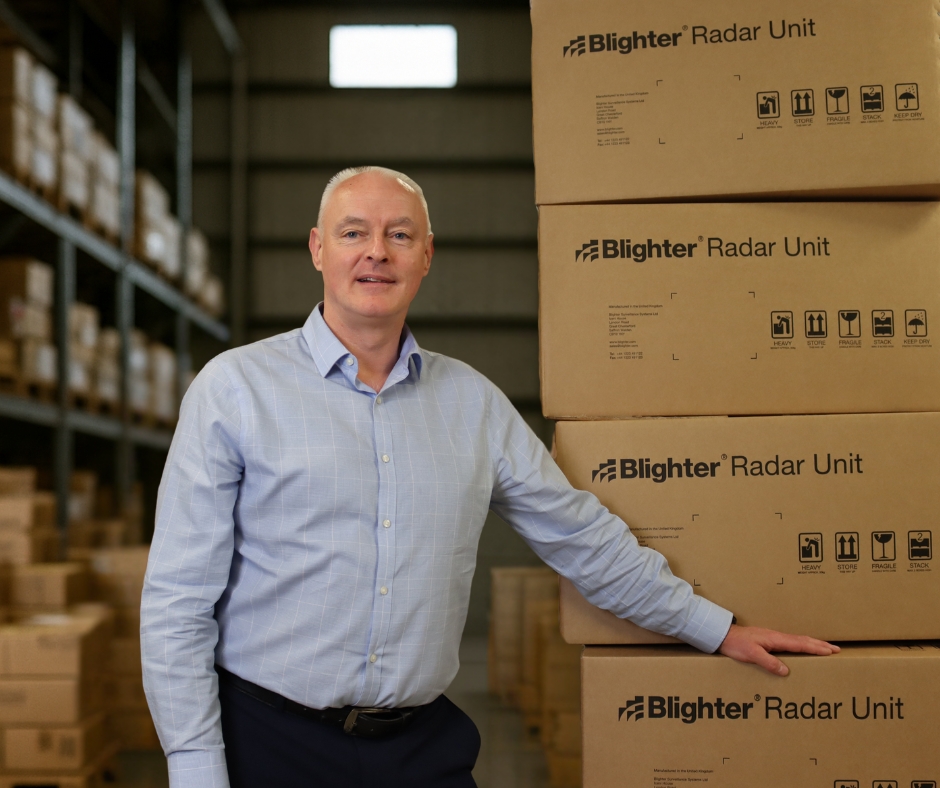
Blighter CEO James Long with our B400 Series Radars. We will be showcasing these at DSEI 2025

James Long, CEO at Blighter, says, “It’s been a terrific year for the company having achieved a record order book and recently celebrating ten years since the spin out from our parent company, Plextek. We will continue to put our defence customers and integrators first by making it ever more straightforward and cost-effective for them to buy, deploy and integrate our radars.” 

In 2025, Blighter has further strengthened the business case for its low power advanced e-scan radars with a trio of enhancements – new levels of adaptiveness to the environment in its coastal security radars, extending the range of its border surveillance radars, and using artificial intelligence (AI) to transform radar to command and control (C2) system integration. 

First, the launch of the BlighterNexus AI-assisted connectivity and processing hub has drastically reduced the training and operational burden on systems integrators seeking to incorporate Blighter’s smart/cognitive ITAR-free 2D, 3D and 4D radars into their C2 systems. Estimated cost savings of up to 20 percent can be achieved by customers and integrators using the AI-assisted software to automate setup, configuration and adjustment of multiple radars to deliver optimum performance even in changing weather conditions.  

Second, Blighter’s new B422 long-range border surveillance radar has been enhanced to now detect a person at 15km with just 4 Watts of power. This extended range from 8km to 15km, without the need for additional power, means earlier interception of intruders and significant cost savings for border control operators with fewer radars needed due to the three-fold increase of the radar’s coverage.  

Third, Blighter’s engineers have also been working on a government/industry coastal surveillance project. This has resulted in significant improvements to the adaptiveness of the Blighter C400 coastal security radar. Through fine tuning of the electronic scanning beam and the micro-Doppler tracking function, the radar can now automatically and dynamically adapt to the prevailing environmental conditions. This will not only make the coastal radar more effective, but it will also reduce the training and operational burden on customers. 

The Blighter C400 radar will be featured on development partner Kirintec’s stand. Kirintec is owned by BAE Systems and specialises in Cyber and Electromagnetic Activities (CEMA), Counter-IED and Counter-UAS technology.  

“We are looking forward to DSEI and welcoming a host of overseas delegations to our stand, showcasing new technology, discussing collaborative partnerships, and demonstrating how we are responding to the future needs of our defence partners,” says James Long. 

Blighter’s ITAR-free smart radars with AI-assisted software deliver up to 360-degrees of pure electronic scanning coverage and are field proven to work 24 hours a day, 365 days a year, in all weather conditions, detecting, tracking and identifying any human, vehicle/vessel and near ground aerial threats.  

Blighter radars are trusted by the UK Ministry of Defence for forward operating base (FOB) protection, the South Korean Army for border surveillance along the Demilitarised Zone (DMZ), by the United States Air Force for drone detection, and by several Five Eyes/NATO customers for deployment on their mobile surveillance and armoured vehicles. 

Blighter introduced the world’s first, non-rotating, solid-state, electronic-scanning, micro-Doppler ground radar in 2003. Today, the product portfolio covers the three domains of land, sea and air with the B400, C400, A400 and A800 family of ground-based radars. The radars’ modular design enables the technology to be deployed on towers and vehicles, and as dismounted portable systems on tripods.  

The Blighter radar’s patented, compact design and low-power electronic scanning and frequency-modulated continuous-wave (FMCW) technologies contains no moving parts. This ensures ease of installation and ultra-reliable operation with minimal maintenance even in the harshest conditions. 

The Blighter team will be on stand number N6-166 at this year’s DSEI Defence and Security show. For more information about Blighter’s range of electronic scanning radars, please visit www.blighter.com, telephone +44 1223 491122 or email [email protected]. 


Media Photo:   

https://www.blighter.com/wp-content/uploads/James-Long-Blighter-Radars.jpg


About Blighter (www.blighter.com) 

Blighter, Cambridge UK, is a pioneering designer and manufacturer of ground-based electronic-scanning radars for surveillance of moving objects on the ground, along coastlines and in the air. Blighter radars use patented ultra-reliable, low SWaP – size, weight, and power (4 Watts) – electronic-scanning antenna technology and advanced AI (artificial intelligence) assisted software to detect, track and classify near ground threats in complex environments. Blighter radars are also used as part of short-range air defence (SHORAD) systems to detect drones and FPVs (first person view).  

Blighter radars are trusted by the UK Ministry of Defence for forward operating base (FOB) protection, the South Korean Army for border surveillance along the Demilitarised Zone (DMZ), by the United States Air Force for drone detection, by Five Eyes/NATO customers for deployment on their mobile surveillance and armoured vehicles, and the UK’s major airports for perimeter protection. 

 Blighter’s commercial-off-the-shelf (COTS) product portfolio includes ITAR-free 2D, 3D and 4D radars and a range of software applications to simplify the integration, configuration, control and viewing of multiple networked radars. Pattern of life analysis is used to enhance situational analysis and the speed and efficiency of threat detection. Blighter radars feature Low-Probability-of-Intercept (LPI) waveforms and are designed for rugged operation at fixed and mobile locations and on the move.  

 Blighter supports the local assembly of certain products to enable indigenous manufacture and works in partnership with international systems integrators to create layered multi-sensor surveillance systems for asset and area protection. Blighter is located in Great Chesterford on the outskirts of Cambridge, UK. 

 Media contact: 

 Martin Brooke (for Blighter) 

Martin Brooke Associates  

Tel: +44 (0) 7776 135402  

Email: [email protected] 


Blighter’s Smart E-scan Radars Deployed to Protect Oil Facilities in Petro-piracy Hotspot

CAMBRIDGE, UK, July 29, 2025 – Blighter (www.blighter.com), a pioneering designer and manufacturer of Smart electronic-scanning radars, has deployed its dual-mode Blighter C400 series coastline surveillance technology to protect offshore oil platforms and an onshore refinery in Equatorial Guinea, a Petro-piracy hotspot off the West African coast. 

Blighter’s C400 series radars have been proven to be highly effective in targeting the growing problem of piracy. It is estimated that the illegal black market for stolen oil is worth over US$1 billion. The radars in Equatorial Guinea are now fully operational following system configuration and training. 

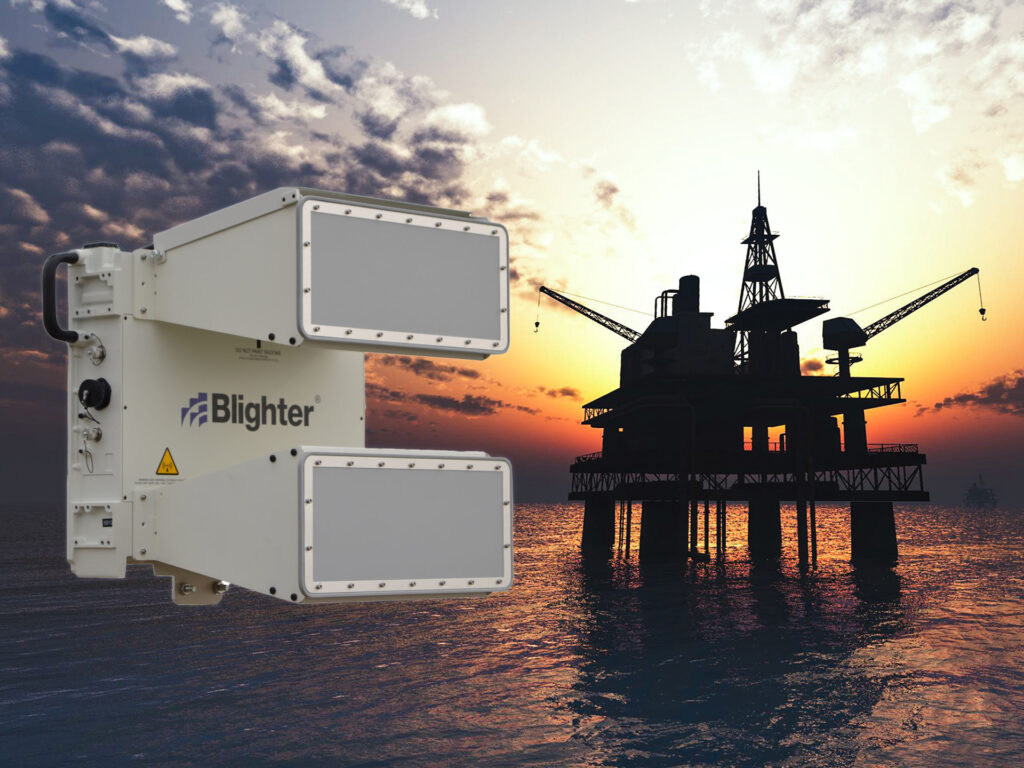
Blighter's C400 Radar, for coastline security, used on offshore oil rigs around the world
Blighter’s C400 Radar, for coastline security, used on offshore oil rigs around the world.

According to Blighter, its customer needed a compact coastline radar system that was easy to install, ultra-reliable and could detect, track and classify the small shallow-draught vessels favoured by oil pirates and militants, which typically sit low in the water and move at speed. It was vital that the radar sensor selected provided detection day and night in all weather conditions, including heavy rain, fog and during thunderstorms. 

James Long, Blighter’s CEO, says: “We know that oil pirates are highly organised and often choose to exploit harsh weather conditions to evade detection with many only becoming active during heavy rains or high sea states. Our C400 radar systems were chosen to plug the gap in our customer’s defences as our sensors are specifically designed to detect even the smallest uncooperative targets in complex, cluttered and extreme environments.” 

Blighter’s C400 radars have several features that make them suitable for coastline surveillance, and particularly for detecting uncooperative targets. First, the compact design and low-power electronically scanning and frequency-modulated continuous-wave (FMCW) technologies contains no moving parts. This ensures ease of installation and ultra-reliable operation with minimal maintenance even in the harshest marine conditions. The C400 series is IP66-rated and MIL-STD-810F compliant. 

Second, the Blighter C400 series radar uses advanced Doppler signal processing to provide the ability to precisely examine the motion of waterborne objects with respect to waves or ripples on the water surface. Unlike traditional Doppler radars, the C400 series characterises non-moving targets using the static target detector so that moored boats, buoys and other structures remain visible on the radar screen.  

Third, the radar’s built-in sea clutter filter automatically adapts to changing sea states and wave conditions to remove the unwanted radar signal produced by waves using both velocity (speed) and amplitude (height) characteristics. 

Blighter radar’s e-scan antenna technology and FMCW design also allows it to be mounted high on offshore platforms and onshore towers and still detect targets close to the platform or shore as well as those further away. In Equatorial Guinea, the detection range of the C400 radars is around 20km. Importantly, all of the radars deployed are networked together to provide onshore controllers with a common operating picture (COP) of the offshore and onshore facilities.  

“We are delighted to see that our radar technology is continuing to be used to combat the costly problem of Petro-piracy in the oil and gas industry,” says James Long, Blighter’s CEO. “Our C400 radars have proved to be highly effective against piracy and their dual mode operation allows detection of small and/or slow-moving boats at sea as well as ground targets such as intruders on the coastline shore.” 

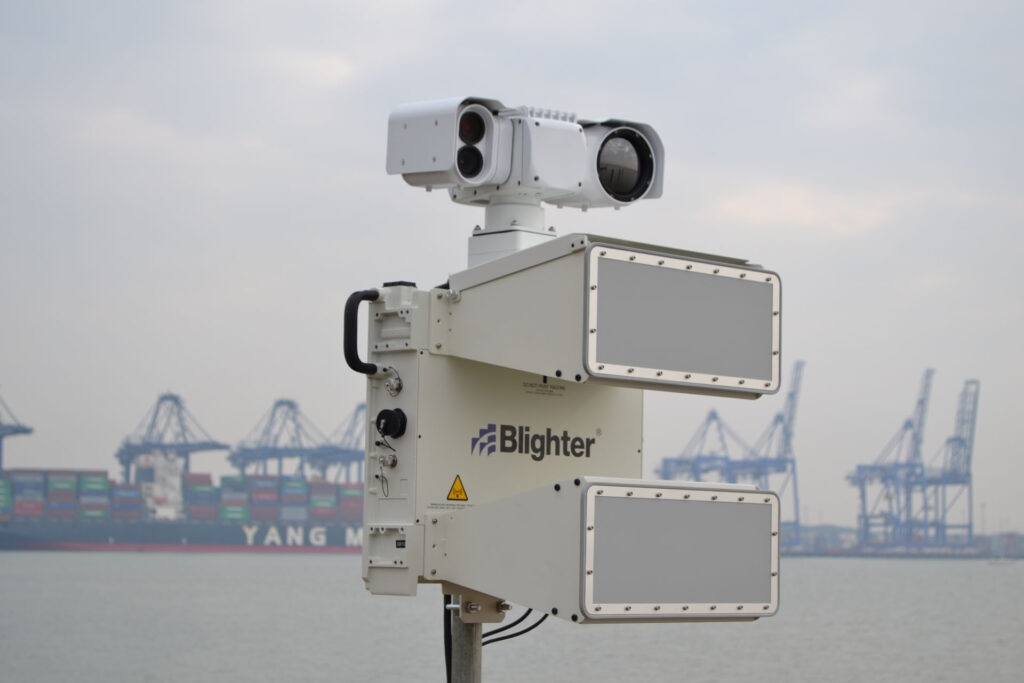
The Blighter C400 series radar can be integrated into a larger coastal security system incorporating day/night and fog penetrating electro-optical camera systems, AIS (automatic identification system), other boat transponder/tracking systems and CCTV. These elements can all be controlled through Blighter’s command and control (C2) software platform. 

Blighter C400 series radars are also suitable for other coastal security applications including seaport security surveillance and water-side security of land based coastal assets, such as desalination plants, nuclear power stations, palaces and other high value assets.  

For more information about the Blighter C400 coastline surveillance radar, please visit www.blighter.com, telephone +44 1223 491122 or email [email protected]. Or come and meet the team on Stand N6-166 at the DSEI Defence and Security show taking place at the ExCel Centre in London, from 9-12 September 2025.  

Media Photos:   

Blighter’s C400 Radar and Offshore Oil Rig

Blighter’s C400 Radars protect offshore oil rigs in the harshest weather

CEO, James Long

Blighter’s C400 Radar for Coastline Security

Offshore Oil Rig

Datasheet:   

https://www.blighter.com/wp-content/uploads/blighter-c400-series-radars-datasheet-bss-1706.pdf 

About Blighter (www.blighter.com) 

Blighter, Cambridge UK, is a pioneering designer and manufacturer of ground-based electronic-scanning radars for surveillance of moving objects on the ground, along coastlines and in the air. Blighter radars use patented ultra-reliable, low SWaP – size, weight, and power (4 Watts) – electronic-scanning antenna technology and advanced AI (artificial intelligence) assisted software to detect, track and classify small and slow-moving threats in complex environments. Blighter radars are also used as part of short-range air defence (SHORAD) systems to detect drones and FPVs (first person view). Blighter radars are trusted by the UK Ministry of Defence for forward operating base (FOB) protection, the South Korean Army for border surveillance along the Demilitarised Zone (DMZ), by the United States Air Force for drone detection, and the UK’s major airports for perimeter protection. 

Blighter’s commercial-off-the-shelf (COTS) product portfolio includes ITAR-free 2D, 3D and 4D radars and a range of software applications to simplify the integration, configuration, control and viewing of multiple networked radars. Pattern of life analysis is used to enhance situational analysis and the speed and efficiency of threat detection. Blighter radars feature Low-Probability-of-Intercept (LPI) waveforms and are designed for rugged operation at fixed and mobile locations and on the move. Blighter supports the local assembly of certain products to enable indigenous manufacture and works in partnership with international systems integrators to create layered multi-sensor surveillance systems for asset and area protection. Blighter is located in Great Chesterford on the outskirts of Cambridge, UK. 

Media contact: 

Martin Brooke (for Blighter) 

Martin Brooke Associates  

Tel: +44 (0) 7776 135402  

Email: [email protected] 

Blighter’s New Long-Range Border Surveillance Radar Detects a Person at 15km with just 4 Watts of Power

CAMBRIDGE, UK, June 4, 2025 – Blighter (www.blighter.com), a pioneering designer and manufacturer of electronic-scanning ground movement radars, has unveiled its longest-range smart border surveillance radar system which can detect a person 15km or 9.3 miles away with just 4 Watts of power – that’s the same as what is needed to power a mobile phone or a modern LED light bulb. 

According to Blighter, this extended range means earlier interception of intruders and significant cost savings for border security operators. With its ‘person at 15km’ detection range, the Blighter B422LR (long-range) border surveillance system can now monitor an area of 707km² compared with 201km² for a radar with a ‘person at 8km’ range.

Blighter’s export-friendly B422LR border surveillance system provides up to 360-degrees of pure electronic scanning coverage with no mechanical rotation using static, low power, solid-state transmitters. This low power, low bandwidth system can be operated using solar panels and has no need for additional forced air cooling making it ideal for remote operation along national borders. 

Mark Radford, co-founder and chief technology officer (CTO) at Blighter, says, “This new ultra-reliable long-range e-scan radar enhances our leadership position in the global border surveillance market. Our radar’s ability to detect a person 15km away, or a crawler 6.4km away, in all weathers and in complex terrains, and with just 4 Watts of transmission power, makes the case for adopting our solution even more compelling.  

“As our recent record order book shows, governments and border forces are increasingly adopting our e-scan radars as the primary detection sensors for their long-range remote surveillance systems. With the extended range, customers will not only be able to detect and intercept targets earlier but with larger area covered by each radar system, the number of radars and towers and the supporting infrastructure will be reduced. 

Blighter’s B422LR border surveillance radar system uses frequency modulated continuous wave (FMCW) transmission technology, combined with sensitive micro-Doppler target detection. This means the radar has a small communications bandwidth requirement and therefore needs only a fraction of the transmitter power used by traditional security radar systems and dramatically less than classic radar systems. 

Our radar’s low size, weight and power (SWaP) profile coupled with the extended range is a huge benefit to border authorities,” adds Mark Radford. “But it is also vital that the radars are easy to integrate with our customers’ command and control (C2) systems. We achieve this using our BlighterNexus AI-assisted Hub.” 

Blighter’s B422LR works with BlighterNexus to ease integration of the remote radars with command and control (C2) systems to provide border authorities with a common operating picture (COP), a real-time, unified view of the border environment. BlighterNexus also optimises target detection capabilities while reducing training and operational costs as the AI-assisted software automates setup, configuration and adjustment of multiple radars to deliver optimum performance even in changing weather conditions. 

Blighter’s radar products are export-friendly and not subject to U.S. International Traffic in Arms Regulations (ITAR) neither are they governed by the European Union’s dual-use export control regulations. Mark Radford says, “Our ITAR-free status and the licensing of our products for commercial and military applications give us a strategic advantage in the global border security market, making us easy to do business with while reducing considerably the licensing requirements for our customers when buying and deploying our technology.” 

For more information about the Blighter B422LR border surveillance radar, please visit www.blighter.com, telephone +44 1223 491122 or email [email protected]. 

Media Photos:  

https://www.blighter.com/wp-content/uploads/b422-lr-border-surveillance-system.jpg  

https://www.blighter.com/wp-content/uploads/Blighter-B400-Series-Smart-Radar-for-Border-Surveillance-scaled.jpg 

https://www.blighter.com/wp-content/uploads/Blighter-B400-smart-radar-for-border-surveillance-scaled.jpg 

Photo caption:  

The Blighter B422 long-range smart border surveillance e-scan radar system can detect a person 15km or 9.3 miles away with just 4 Watts of power. 

Datasheet:  

blighter-b422-lr-border-surveillance-system-datasheet-1.pdf 

About Blighter (www.blighter.com) 

Blighter, Cambridge UK, is a pioneering designer and manufacturer of ground-based electronic-scanning radars for surveillance of moving objects on the ground, along coastlines and in the air. Blighter radars use patented ultra-reliable, low SWaP – size, weight, and power (4 Watts) – electronic-scanning antenna technology and advanced AI (artificial intelligence) assisted software to detect, track and classify small and slow-moving threats in complex environments. Blighter radars are also used as part of short-range air defence (SHORAD) systems to detect drones and FPVs (first person view). Blighter radars are trusted by the UK Ministry of Defence for forward operating base (FOB) protection, the South Korean Army for border surveillance along the Demilitarised Zone (DMZ), by the United States Air Force for drone detection, and the UK’s major airports for perimeter protection. 

Blighter’s commercial-off-the-shelf (COTS) product portfolio includes ITAR-free 2D, 3D and 4D radars and a range of software applications to simplify the integration, configuration, control and viewing of multiple networked radars. Pattern of life analysis is used to enhance situational analysis and the speed and efficiency of threat detection. Blighter radars feature Low-Probability-of-Intercept (LPI) waveforms and are designed for rugged operation at fixed and mobile locations and on the move. Blighter supports the local assembly of certain products to enable indigenous manufacture and works in partnership with international systems integrators to create layered multi-sensor surveillance systems for asset and area protection. Blighter is located in Great Chesterford on the outskirts of Cambridge, UK. 

Media contact: 

Martin Brooke (for Blighter) 

Martin Brooke Associates  

Tel: +44 (0) 7776 135402  

Email: [email protected] 

Blighter Achieves Record £25m Order Book Following Border Surveillance Smart Radar Contract Wins

CAMBRIDGE, UK, May 13, 2025 – Blighter (www.blighter.com), a pioneering designer and manufacturer of smart electronic-scanning radars, has achieved a record £25 million order book in the last 12 months. This follows a series of contract wins for its ground-based border surveillance radars – for fixed and mobile surveillance applications – from customers in three different continents.

In the Middle East and North Africa, Blighter secured contracts to deploy multiple long-range radars along extensive national borders. Two further orders were for radars integrated into mobile surveillance vehicles – one in Southeast Asia and another to monitor a European Union land border. In addition, a Five Eyes customer ordered twenty-two ground surveillance radars for deployment on its armoured vehicles.

James Long, CEO at Blighter, says, “It has been a record breaking 12 months for the company with orders totalling more than £25 million for our border surveillance radars. This growth is being driven in part by the increasing geopolitical tensions and border disputes globally as governments look to monitor and secure their boundaries effectively from illegal crossings, smuggling, people trafficking and other security breaches.

“However, our success is also fuelled by governments and homeland security experts understanding the compelling business case for investing in COTS-based electronic-scanning radars for border surveillance. The Korean Army’s deployment of around one hundred of our radar units on the 250km Korean Demilitarised Zone over a decade ago is testament to this.”

Blighter’s solid-state, non-rotating, low power and near zero maintenance radars have been operational in South Korea since 2011. The radars provide a persistent surveillance capability along the DMZ in what is considered one of the world’s most mountainous countries with environmental extremes of -30ºC in winter and a humid +40ºC in summer. They work 24 hours a day, 365 days a year, monitoring the 4km-wide DMZ for any human, vehicle or low-flying aircraft incursions.

“The DMZ has become an excellent reference site for the ultra-reliability and effectiveness of our ground movement radars,” says James Long. “We are confident that we can build on our sales success in the last 12 months continuing to innovate and by leveraging the growing number of reference sites – our radars are now operational in more than 40 different countries.

The Blighter B400 series radars are particularly well suited to national border surveillance applications with their long-range detection capability, 20-degree wide elevation beam, which provides simultaneous hill-top and valley coverage. The radars can detect very small and slow targets such as a crawling person up to 6.4 km away and a walking person up to 15 km, and a vehicle at up to 32 km, even in cluttered environments.

Since introducing the world’s first, non-rotating, solid-state, electronic-scanning, micro-Doppler ground radar in 2003, Blighter has continued to lead this market with ITAR-free 2D, 3D and 4D radars and advanced AI (artificial intelligence) assisted software to detect, track and classify small and slow-moving threats in complex environments.

Pattern of life analysis is now used to enhance situational analysis and the speed and efficiency of threat detection. Blighter radars also feature Low-Probability-of-Intercept (LPI) waveforms and are designed for rugged operation at fixed and mobile locations and on the move. Blighter supports the local assembly of certain products to enable indigenous manufacture.

For more information about Blighter’s range of electronic scanning radars, please visit www.blighter.com, telephone +44 1223 491122 or email [email protected].


About Blighter (www.blighter.com)

Blighter, Cambridge UK, is a pioneering designer and manufacturer of ground-based electronic-scanning radars for surveillance of moving objects on the ground, along coastlines and in the air. Blighter radars use patented ultra-reliable, low SWaP – size, weight, and power (4 Watts) – electronic-scanning antenna technology and advanced AI (artificial intelligence) assisted software to detect, track and classify small and slow-moving threats in complex environments. Blighter radars are also used as part of short-range air defence (SHORAD) systems to detect drones and FPVs (first person view). Blighter radars are trusted by the UK Ministry of Defence for forward operating base (FOB) protection, the South Korean Army for border surveillance along the Demilitarised Zone (DMZ), by the United States Air Force for drone detection, and the UK’s major airports for perimeter protection.

Blighter’s commercial-off-the-shelf (COTS) product portfolio includes ITAR-free 2D, 3D and 4D radars and a range of software applications to simplify the integration, configuration, control and viewing of multiple networked radars. Pattern of life analysis is used to enhance situational analysis and the speed and efficiency of threat detection. Blighter radars feature Low-Probability-of-Intercept (LPI) waveforms and are designed for rugged operation at fixed and mobile locations and on the move. Blighter supports the local assembly of certain products to enable indigenous manufacture and works in partnership with international systems integrators to create layered multi-sensor surveillance systems for asset and area protection. Blighter is located in Great Chesterford on the outskirts of Cambridge, UK.


Media contact:

Martin Brooke (for Blighter)

Martin Brooke Associates      

Tel: +44 (0) 7776 135402      

Email: [email protected]

Blighter Makes Debut at IQDEX in Iraq To Showcase Smart Border Surveillance Radars

CAMBRIDGE, UK, April 17, 2025 – Blighter (www.blighter.com), a pioneering designer and manufacturer of ground-based smart electronic-scanning radars, will be showcasing its border surveillance credentials at this year’s IQDEX Defence Exhibition in Iraq.  

IQDEX is one of the leading defence exhibitions in the MENA (Middle East and North Africa) region, where the latest technology across land, sea and air sectors will be on show. The event takes place at Baghdad International Fairground, Baghdad, Iraq from 19-22 April 2025.  

Blighter debut smart border surveillance radar at IQDEX PR v2.1

James Long, CEO at Blighter, says, “We are making our debut at this year’s IQDEX exhibition and are looking forward to meeting with partners and prospective customers to showcase our long-range border surveillance radars. Our smart radars with AI-assisted software are field proven to work 24 hours a day, 365 days a year, monitoring for any human, vehicle or low-flying aircraft incursions.” 

The Blighter solid-state, non-rotating, low power and near zero maintenance electronic-scanning radars operate in extreme environmental conditions including the hottest, toughest locations close to the Equator.  

“Our radars have a reputation for ultra reliability and monitor national borders in many countries,” says James Long. “Around 100 of our radar units have been successfully guarding the 250km Korean Demilitarised Zone (DMZ) for over a decade in what is considered one of the world’s most mountainous countries with environmental extremes of -30ºC in winter and a humid +40ºC in summer.” 

The Blighter B400 series radars are particularly well suited to national border surveillance applications with their long-range detection capability from just 10 m up to 32 km. The 20º wide elevation beam also provides simultaneous hill-top and valley coverage. The radars can detect very small and slow targets such as a crawling person up to 6.4 km away and a walking person up to 15 km, and a vehicle up to 32 km even in cluttered environments.   

“We are continuing to win new overseas border surveillance contracts in the MENA region for our ITAR free products,” says James Long. “With the necessary export licenses in place, and a flexible approach to local assembly of certain products to enable indigenous manufacture, we look forward to forging further partnerships at this year’s IQDEX event.”  

Since introducing the world’s first, non-rotating, solid-state, electronic-scanning, micro-Doppler ground radar in 2003, Blighter has continued to lead this market with 2D, 3D and 4D smart/cognitive radars and advanced AI (artificial intelligence) assisted software to detect, track and classify small and slow-moving threats in complex environments.  

Pattern of life analysis is now used to enhance situational analysis and the speed and efficiency of threat detection. Blighter radars also feature Low-Probability-of-Intercept (LPI) waveforms and are designed for rugged operation at fixed and mobile locations and on the move.  

For more information about Blighter’s range of electronic scanning radars, please visit www.blighter.com, telephone +44 1223 491122 or email [email protected]. 


About Blighter (www.blighter.com) 

Blighter, Cambridge UK, is a pioneering designer and manufacturer of ground-based electronic-scanning radars for surveillance of moving objects on the ground, along coastlines and in the air. Blighter radars use patented ultra-reliable, low SWaP – size, weight, and power (4 Watts) – electronic-scanning antenna technology and advanced AI (artificial intelligence) assisted software to detect, track and classify small and slow-moving threats in complex environments. Blighter radars are also used as part of short-range air defence (SHORAD) systems to detect drones and FPVs (first person view). Blighter radars are trusted by the UK Ministry of Defence for forward operating base (FOB) protection, the South Korean Army for border surveillance along the Demilitarised Zone (DMZ), by the United States Air Force for drone detection, and the UK’s major airports for perimeter protection. 

Blighter’s commercial-off-the-shelf (COTS) product portfolio includes ITAR-free 2D, 3D and 4D radars and a range of software applications to simplify the integration, configuration, control and viewing of multiple networked radars. Pattern of life analysis is used to enhance situational analysis and the speed and efficiency of threat detection. Blighter radars feature Low-Probability-of-Intercept (LPI) waveforms and are designed for rugged operation at fixed and mobile locations and on the move. Blighter supports the local assembly of certain products to enable indigenous manufacture and works in partnership with international systems integrators to create layered multi-sensor surveillance systems for asset and area protection. Blighter is located in Great Chesterford on the outskirts of Cambridge, UK. 


Media contact: 

Martin Brooke (for Blighter) 

Martin Brooke Associates  

Tel: +44 (0) 7776 135402  

Email: [email protected] 

Blighter To Host Overseas Delegations from Iraq and Eastern Europe at Security & Policing 2025

CAMBRIDGE, UK, March 6, 2025 – Blighter (www.blighter.com), a pioneering designer and manufacturer of ground-based smart electronic-scanning radars for border and coastal security, will be hosting delegations from Estonia, Iraq, Latvia and Lithuania at this year’s Security & Policing (S&P) exhibition. This global security event, organised by the UK Government, is taking place at the Farnborough International Exhibition and Conference Centre between 11 and 13 March 2025.

Blighter will be showcasing (on stand A105) its world-leading ITAR-free 2D, 3D and 4D smart/cognitive radars as well as its new BlighterNexus AI-assisted connectivity and processing hub software. BlighterNexus is designed to drastically reduce the training and operational burden on systems integrators looking to incorporate smart radars into their command and control (C2) systems.

James Long, CEO at Blighter, says, “We are continuing to win new overseas border and coastal security contracts with solutions based around our patented, low power Blighter B400 and Blighter C400 ground-based micro-Doppler radars. With our ITAR free products, the necessary export licenses in place, and a reputation for ultra reliability – our radars have been monitoring the Korean Demilitarised Zone (DMZ) for over a decade – we look forward to forging further partnerships at this year’s S&P event.”

Since introducing the world’s first, non-rotating, solid-state, electronic-scanning, micro-Doppler ground radar in 2003, Blighter has continued to lead this market with radars and advanced AI (artificial intelligence) assisted software to detect, track and classify small and slow-moving threats in complex environments.

Pattern of life analysis is now used to enhance situational analysis and the speed and efficiency of threat detection. Blighter radars also feature Low-Probability-of-Intercept (LPI) waveforms and are designed for rugged operation at fixed and mobile locations and on the move. Blighter supports the local assembly of certain products to enable indigenous manufacture.

At S&P 2024, Blighter’s engineering team will provide detailed briefings to stakeholders on how these innovations can redefine their surveillance strategies, making them more effective and economically efficient. Visitors can attend the event for free by registering here.

For more information about Blighter’s range of electronic scanning radars, please visit www.blighter.com, telephone +44 1223 491122 or email [email protected]. 


About Blighter (www.blighter.com)

Blighter, Cambridge UK, is a pioneering designer and manufacturer of ground-based electronic-scanning radars for surveillance of moving objects on the ground, along coastlines and in the air. Blighter radars use patented ultra-reliable, low SWaP – size, weight, and power (4 Watts) – electronic-scanning antenna technology and advanced AI (artificial intelligence) assisted software to detect, track and classify small and slow-moving threats in complex environments. Blighter radars are also used as part of short-range air defence (SHORAD) systems to detect drones and FPVs (first person view). Blighter radars are trusted by the UK Ministry of Defence for forward operating base (FOB) protection, the South Korean Army for border surveillance along the Demilitarised Zone (DMZ), by the United States Air Force for drone detection, and the UK’s major airports for perimeter protection.

Blighter’s commercial-off-the-shelf (COTS) product portfolio includes ITAR-free 2D, 3D and 4D radars and a range of software applications to simplify the integration, configuration, control and viewing of multiple networked radars. Pattern of life analysis is used to enhance situational analysis and the speed and efficiency of threat detection. Blighter radars feature Low-Probability-of-Intercept (LPI) waveforms and are designed for rugged operation at fixed and mobile locations and on the move. Blighter supports the local assembly of certain products to enable indigenous manufacture and works in partnership with international systems integrators to create layered multi-sensor surveillance systems for asset and area protection. Blighter is located in Great Chesterford on the outskirts of Cambridge, UK.


Media contact:


Martin Brooke (for Blighter)

Martin Brooke Associates 

Tel: +44 (0) 7776 135402  

Email: [email protected]


Blighter Transforms Smart Radar-C2 System Integration with AI-assisted BlighterNexus Hub

CAMBRIDGE, UK, February 4, 2025 – Blighter (www.blighter.com), a pioneering designer and manufacturer of ground-based electronic-scanning radars for border and coastal security, has unveiled BlighterNexus, an AI-assisted connectivity and processing hub.

BlighterNexus is designed to drastically reduce the training and operational burden on systems integrators seeking to incorporate Blighter’s smart/cognitive ITAR-free 2D, 3D and 4D radars into their command and control (C2) systems.

According to the company, cost savings of up to 20 percent can be achieved by customers and integrators using the AI-assisted software to automate setup, configuration and adjustment of multiple radars to deliver optimum performance even in changing weather conditions.

Mark Radford, co-founder and chief technology officer (CTO) at Blighter, says: “BlighterNexus is a groundbreaking product that will simplify radar to C2 system integration. Our aim is to become the integrator’s friend by providing a modular, scaleable and upgradeable platform that will not only be simple to integrate, simple to operate but will also optimise target detection capabilities while reducing our customers’ training and operational costs.”

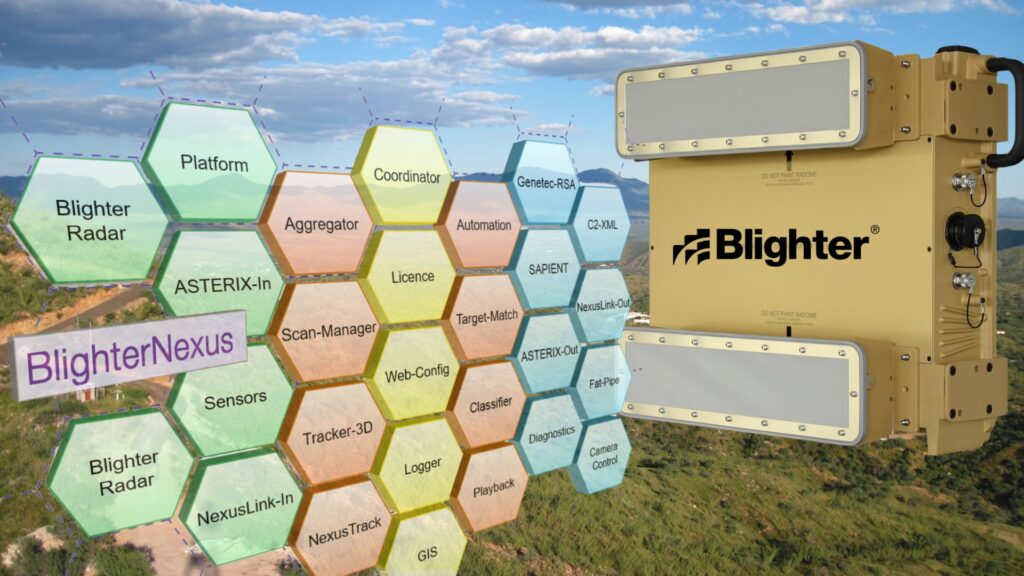
The BlighterNexus AI-assisted Hub comprises around thirty different licensable ‘service’, ‘sensor-connector’, ‘C2-connector’ and ‘application’ modules. For example, in addition to the automation functions, there are sensor connector modules to allow low latency integration of cameras, radio direction finding (RDF) equipment for drone detection and other geo sensors to provide integrators with an all-in-one detect-track-identify capability.

BlighterNexus also features a module to securely record all sensor data for real-time playback and/or post mission/forensic analysis and an AI system for target classification. For integrators who want to fuse and cognitively assess data from multiple sensors, a Fat-Pipe module allows all radar data to be flooded out of BlighterNexus into an external AI system if preferred.

“Our patented electronic-scanning radars are already deployed in over 40 countries to protect national borders, ports and harbours as well as critical infrastructure sites,” says Mark Radford. “The launch of BlighterNexus consolidates our position as the radar supplier of choice for integrators wanting to create layered multi-sensor surveillance systems to detect, track and classify small and slow-moving threats in complex environments.”

BlighterNexus comes pre-installed on an industrial PC to simplify setup and allow flexible licensing and through-life support. The BlighterNexus Hub provides a unified 360-degree radar feed to the C2 system or additional BlighterNexus Hubs.

Blighter radars are trusted by the UK Ministry of Defence for forward operating base (FOB) protection, the South Korean Army for border surveillance along the Demilitarised Zone (DMZ), by the United States Air Force for drone detection, and the UK’s major airports for perimeter protection. Blighter radars feature Low-Probability-of-Intercept (LPI) waveforms and are designed for rugged operation at fixed and mobile locations and on the move.

Blighter will be exhibiting at The International Defence Exhibition and Conference, IDEX, at the Abu Dhabi National Exhibition Centre (ADNEC), Abu Dhabi, UAE, from 17-21 February 2025 (UKDSE Stand: 03-C35, Hall 3).

For more information about BlighterNexus and smart/cognitive electronic scanning radars, please visit www.blighter.com, telephone +44 1223 491122 or email [email protected].

Data sheet:

https://www.blighter.com/wp-content/uploads/blighternexus-hub-connectivity-and-processing-platform.pdf

Media photos:

https://www.blighter.com/wp-content/uploads/BlighterNexus-image-3.jpg

-ends-

About Blighter (www.blighter.com)

Blighter, Cambridge UK, is a pioneering designer and manufacturer of ground-based electronic-scanning radars for surveillance of moving objects on the ground, along coastlines and in the air. Blighter radars use patented ultra-reliable, low SWaP – size, weight, and power (4 Watts) – electronic-scanning antenna technology and advanced AI (artificial intelligence) assisted software to detect, track and classify small and slow-moving threats in complex environments.

Since creating the world’s first, non-rotating, solid-state, electronic-scanning, micro-Doppler ground radar in 2003, Blighter has deployed more than 800 radar units in over 40 countries to protect national borders, critical infrastructure sites, personnel at military bases, and ports and harbours. Blighter radars are also used as part of short-range air defence (SHORAD) systems to detect drones and FPVs (first person view). Blighter radars are trusted by the UK Ministry of Defence for forward operating base (FOB) protection, the South Korean Army for border surveillance along the Demilitarised Zone (DMZ), by the United States Air Force for drone detection, and the UK’s major airports for perimeter protection.

Blighter’s commercial-off-the-shelf (COTS) product portfolio includes ITAR-free 2D, 3D and 4D radars and a range of software applications to simplify the integration, configuration, control and viewing of multiple networked radars. Pattern of life analysis is utilised to enhance situational analysis and the speed and efficiency of threat detection. Blighter radars feature Low-Probability-of-Intercept (LPI) waveforms and are designed for rugged operation at fixed and mobile locations and on the move. Blighter supports the local assembly of certain products to enable indigenous manufacture and works in partnership with international systems integrators to create layered multi-sensor surveillance systems for asset and area protection. Blighter is located in Great Chesterford on the outskirts of Cambridge, UK.

Media contact:

Martin Brooke (for Blighter)

Martin Brooke Associates                                                         

Tel: +44 (0) 7776 135402                                                                      

Email: [email protected]

Blighter Exhibiting A800 Multi-Domain Radar at S&P 2024

CAMBRIDGE, UK, February 28th, 2024 – Blighter Surveillance Systems (www.blighter.com), the British designer and manufacturer of electronic-scanning radar and surveillance solutions, will be showcasing its cutting-edge A800 Mk 2 4D multi-mode radar and B400 series radars at S&P 2024. Blighter will be exhibiting at stand A105 at the Farnborough International Exhibition and Conference Centre between 12-14 March 2024.

Blighter’s latest advancements in radar technology, most notably the A800 Mk 2 Multi-Mode radar, epitomise the critical importance of multi-domain surveillance in addressing today’s complex threat landscape. By integrating 4D multi-domain surveillance capabilities into a compact and versatile package, the A800 Mk2 radar delivers unparalleled threat detection at ranges up to 20km. Similarly, the B400 radar excels in long-range ground surveillance, capable of identifying moving vehicles and individuals up to 32 km away. These radars set a new benchmark in near-ground performance, significantly reducing false alarms and enhancing operational efficiency.

The A800 Mk2 radar underscores the value of leveraging a single sensor system for comprehensive surface and air surveillance tasks. By doing so, organisations can achieve substantial cost savings without compromising on security efficacy. The A800 radar is designed for versatility and offers exceptional performance for border and perimeter security, counter-UAS, and Short-Range Air Defence (SHORAD). Blighter radar systems are easily integrated onto fixed structures, land vehicles, including unmanned ground vehicles, and armoured vehicles.

Blighter’s Co-Founder and CTO, Mark Radford, had this to say:

While detection of drones is now an essential part of border and perimeter security, we mustn’t forget that the ground and coastline domains remain as critical as ever in high security situations. Blighter radars excel at small and slow target detection even in heavy ground and water clutter conditions. The Blighter radar range includes single and multi-mode radars to satisfy your perimeter and border security needs in all domains.

Blighter is set to showcase these best-in-class radar capabilities at S&P 2024, where our Sales and Business Development team will provide detailed briefings to stakeholders on how these innovations can redefine their surveillance strategies, making them more effective and economically efficient. Visitors are free to attend for the event by registering here.

Blighter Radar S&P 2024

S&P 2024 featured products:

Blighter A800 Mk 2 4D Multi-Mode Radar Datasheet
Blighter B400 Series Radars Datasheet

For media enquiries or to book an interview, please contact:

Mark Radford (for Blighter)
Tel: +44 7801 398718
Email: [email protected]

About Blighter (www.blighter.com)

Blighter Surveillance Systems is located near Cambridge, UK. Blighter designs and manufactures world-beating 2D and 3D electronic-scanning ground-based radars, which can accurately detect drones, people, vehicles and boats at large distances.

Its radars are key sensors in surveillance and counter-drone applications, and are used in more than 35 countries around the world, delivering 24/7 security protection along national borders and coastlines, at military bases, and to protect manoeuvre force missions when deployed on military land vehicles and trailers. Blighter’s radars also play a key role in guarding critical national infrastructure (CNI) sites such as airports, power plants and oil and gas facilities.

DSEI 2023 Showcases 4D Multi-Mode Radar

CAMBRIDGE, UK, September 5, 2023 – Blighter Surveillance Systems (www.blighter.com), the British designer and manufacturer of electronic-scanning radars and surveillance solutions, will be showcasing its cutting-edge A800 Mk 2 4D multi-mode drone detection radar and B400 series radars at DSEI 2023 in London at the ExCeL exhibition venue from 12 to 15 September. Blighter will be exhibiting in the ADS UK Pavilion (Stand No. H2-568).

Blighter’s A800 Mk 2 radar offers an innovative ground-based solution to threat detection, utilising 4D multi-mode surveillance capability usually reserved for large-scale radar systems and packaging it into a smaller, more flexible radar with a maximum range of 3.5, 10 or 20 km. The B400 series of tactical radars are designed to provide long-range ground surveillance to detect moving vehicles and individuals up to 32 km, benefitting from an unsurpassed level of ground clutter cancellation resulting in a low false alarm rate.

Both the A800 Mk 2 and B400 series radars are well-suited to border and perimeter surveillance, capable of being mounted to fixed towers and masts, as well as to land vehicles (including UGVs and Armoured Vehicles) and mobile surveillance trailers. Blighter’s Sales and Business Development team will be present on the DSEI 2023 stand to brief stakeholders on the best-in-class capabilities of the systems.

DSEI 2023 will take place at the ExCeL London exhibition venue from 12 to 15 September 2023. Registration is available here.

Blighter CEO, James Long said: “Blighter is an established provider of cutting-edge threat detection solutions to our customers in the UK and around the world. We are looking forward to showcasing our best-in-class e-scanning radars, and to be exhibiting in the DSEI 2023 ADS UK Pavilion, representing the best of UK technology on the international stage.”

ENDS

DSEI 2023 featured products:

Blighter A800 Mk 2 4D Multi-Mode Radar Datasheet
Blighter B400 Series Radars Datasheet

For media enquiries or to book an interview, please contact:

Mark Radford (for Blighter)
Tel: +44 7801 398718
Email: [email protected]

About Blighter (www.blighter.com)

Blighter Surveillance Systems is located near Cambridge, UK. Blighter designs and manufactures world-beating 2D and 3D electronic-scanning ground-based radars, which can accurately detect drones, people, vehicles and boats at large distances.

Its radars are key sensors in surveillance and counter-drone applications, and are used in more than 35 countries around the world, delivering 24/7 security protection along national borders and coastlines, at military bases, and to protect manoeuvre force missions when deployed on military land vehicles and trailers. Blighter’s radars also play a key role in guarding critical national infrastructure (CNI) sites such as airports, power plants and oil and gas facilities.