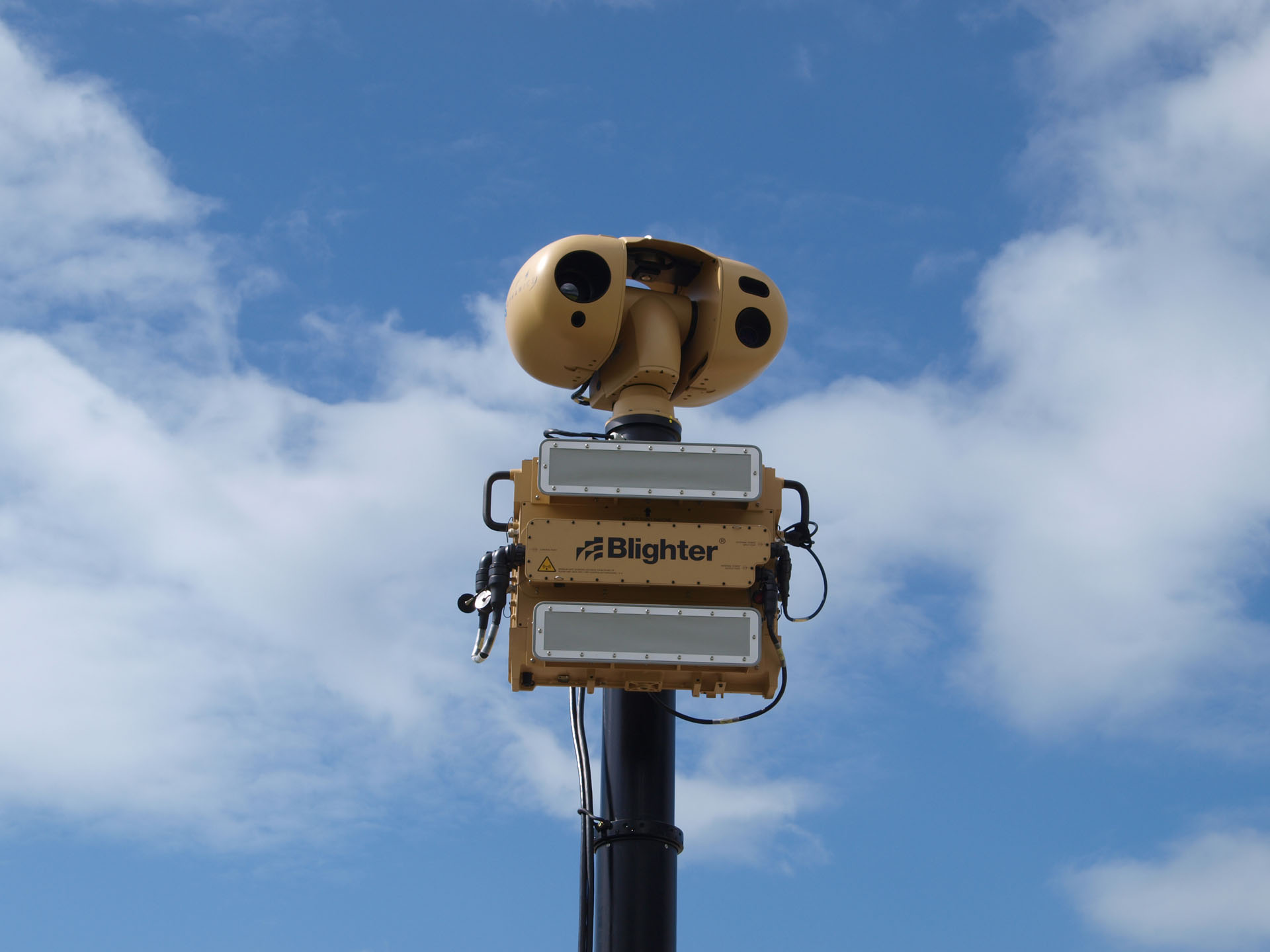
The Telegraph Talks to Blighter CEO Angus Hone

“From a land base or air base those threats are very real and we’ve got the capability to help deliver.” – The Telegraph, 5 March 2022.

Our CEO, Angus Hone, spoke to The Telegraph about Blighter’s unique radar solutions and the applications of emerging detection and counter UAV technology in the modern battlespace.

Events taking place in Ukraine are set to shift demand in favour of specialist equipment.  To read the full article head to: https://www.telegraph.co.uk/business/2022/03/05/russias-threat-another-cold-war-triggers-international-arms/

The Telegraph

For media enquiries and to arrange interviews, please contact:

Gus Haynes (for Blighter)
Tel: +44 7858 101117
Email: [email protected]

About Blighter (www.blighter.com)

Blighter Surveillance Systems employs 40 people and is located near Cambridge, UK. Blighter designs and manufactures world-beating 2D and 3D electronic-scanning ground-based radars, which can accurately detect drones, people, vehicles and boats at large distances.

Its radars are key sensors in surveillance and counter-drone applications, and are used in more than 35 countries around the world, delivering 24/7 security protection along national borders and coastlines, at military bases, and to protect manoeuvre force missions when deployed on military land vehicles and trailers.  Blighter’s radars also play a key role in guarding critical national infrastructure (CNI) sites such as airports, power plants and oil and gas facilities.

World Defense Show to Feature Blighter’s Multi-Mode Radar

Cambridge, UK, February 16, 2022 – Blighter Surveillance Systems (‘Blighter’, www.blighter.com), the British designer and manufacturer of electronic-scanning radars and surveillance solutions is set to exhibit at upcoming international defence exhibitions to showcase the recently launched A800 Multi-Mode Drone Detection Radar, as well as other cutting-edge radar platforms. Following the first appearance of the A800 3D radar at DSEI 2021, as part of the ADS Group UK Pavilion, Blighter’s first round of exhibition visits for 2022 will include the World Defense Show in Saudi Arabia, Security and Policing in the UK, and the Border Security Expo in San Antonio, Texas.

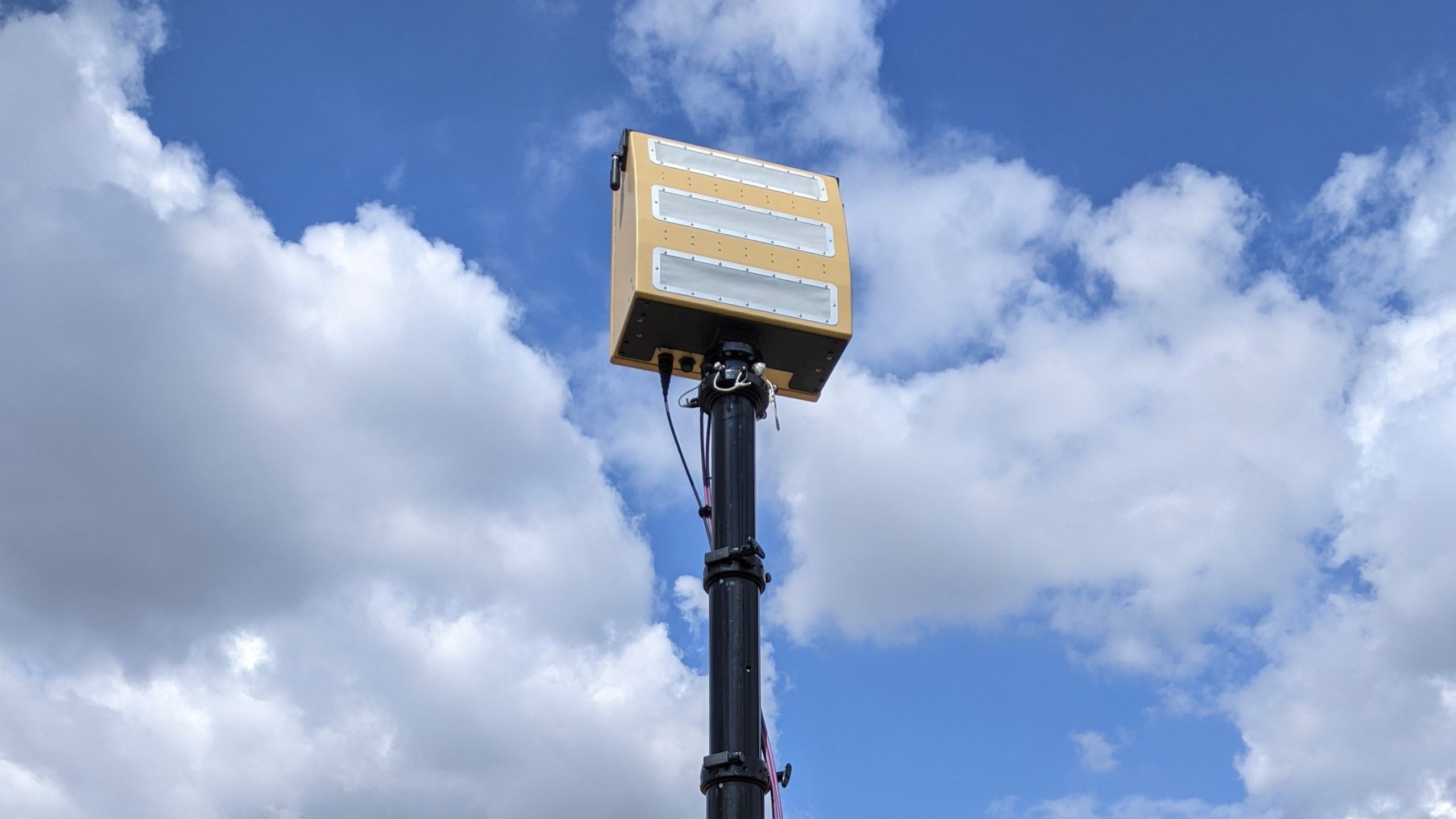
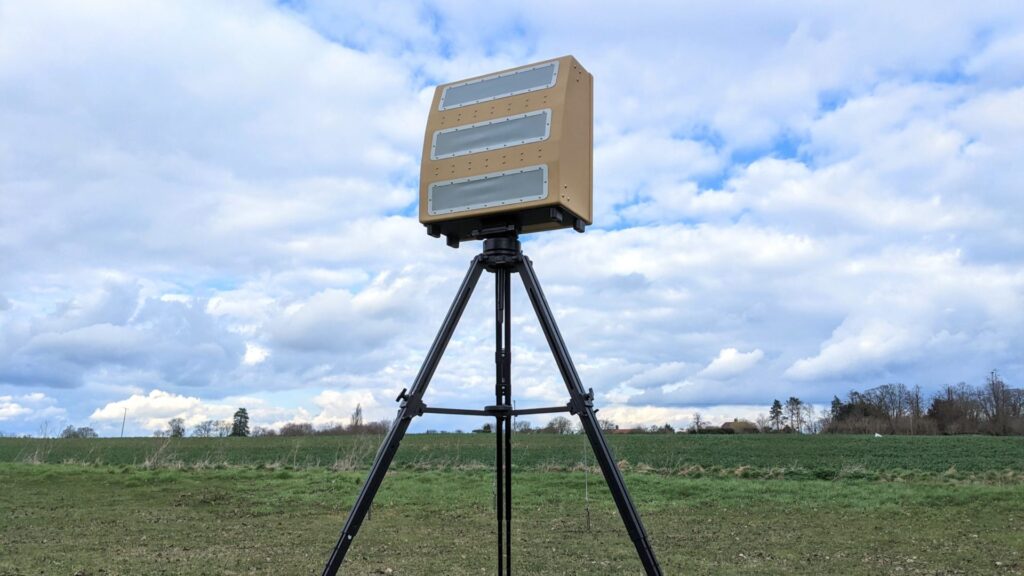
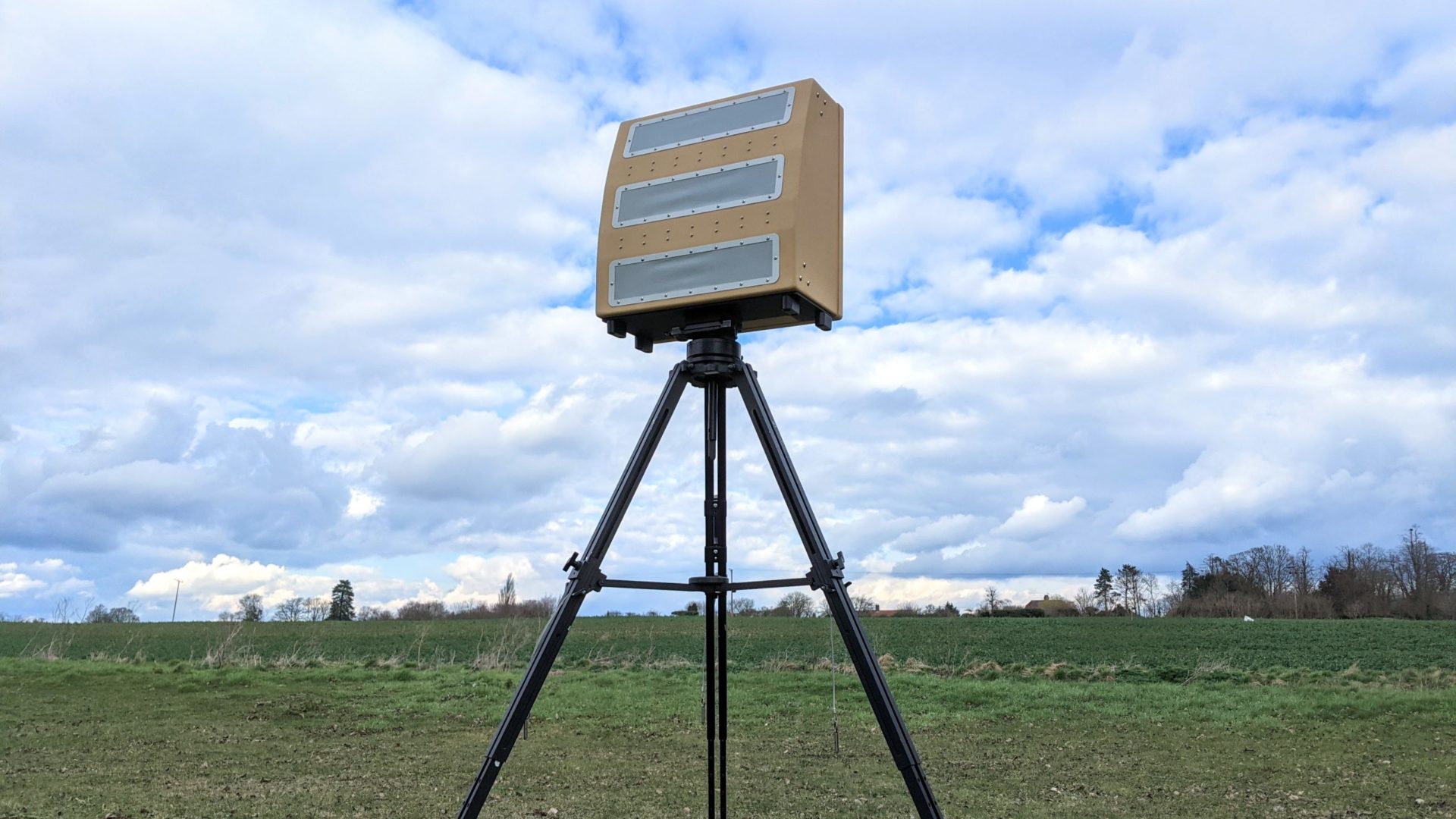
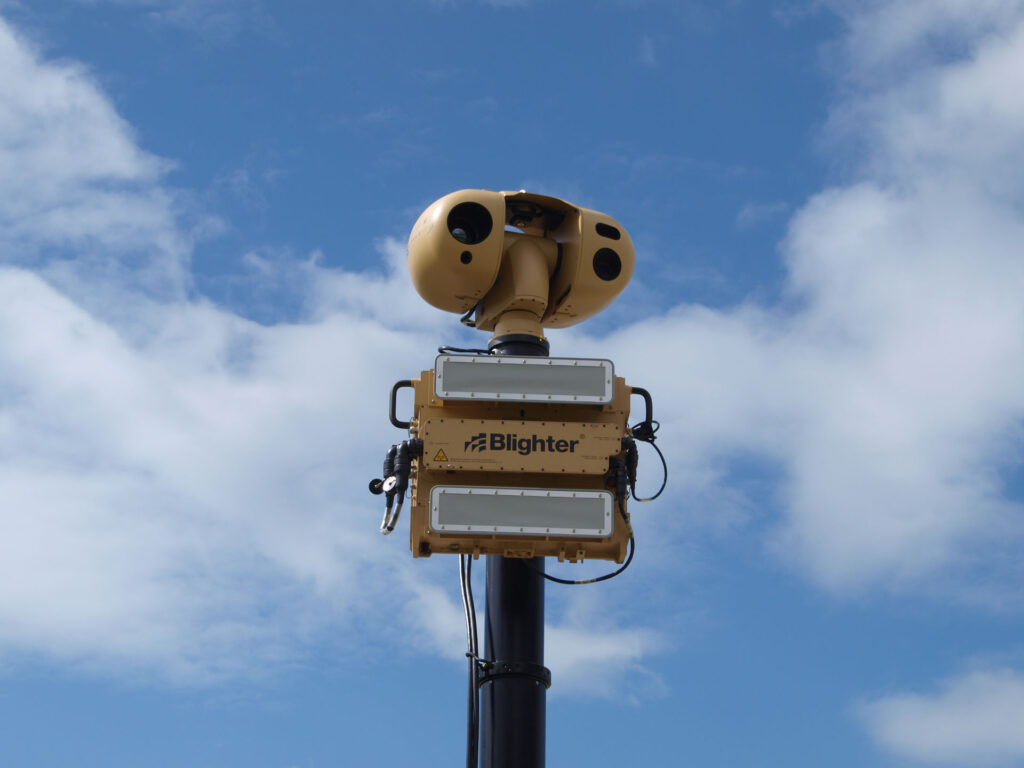
Blighter’s A800 radar (www.blighter.com/a800) offers an innovative ground-based solution to threat detection, utilising multi-mode surveillance capability usually reserved only for large-scale radar systems and packaging it into a smaller, more flexible radar with a maximum range of 20km. The A800 3D multi-mode radar is ideally suited to border and perimeter surveillance, capable of being mounted to fixed towers and masts, as well as to land vehicles and mobile surveillance trailers.

World Defense Show, Security and Policing & Border Security Expo Tour

The World Defense Show will take place from 6-9 March 2022. The event focuses on interoperability across air, land, sea, security innovative defence technologies and satellite defence systems and will be held in Saudi Arabia’s capital, Riyadh. Located at Stand G15.4, Blighter’s showcase will highlight the B400’s applications for border security as a vehicle-mobile or fixed-tower solution capable of high performance in extreme heat conditions.

Security & Policing, the official Government global security event, returns as a live event for its 40th anniversary between 15‐17 March 2022 at the Farnborough International Exhibition and Conference Centre in the UK. Visitors will find Blighter’s stand at A54.

The Border Security Expo is an annual international trade fair with accompanying conference on border security, taking place from 29-30 March in San Antonio, Texas. Blighter will be exhibiting on Stand no. 733. Alongside the A800, visitors will also find a trailer-mast mounted A400 series radar.

Last year the Cambridgeshire-based manufacturer was selected to provide advanced integrated B400 series target acquisition radars for a fleet of Armoured Fighting Vehicles, demonstrating the company’s agility in providing the versatile systems required for such a demanding and mobile role. In July 2021, Blighter’s US partner JGW Group also delivered demonstrations of the highly mobile A400 series radars’ ability to detect and track sUAS targets. Most recently, Blighter won a contract to provide surveillance for offshore and onshore oil facilities in West Africa.

Angus Hone, CEO of Blighter Surveillance Systems said:

“This is an exciting time for our industry as key calendar events for national security, such as Security & Policing and Border Security Expo, are set reconnect our community. We also could not miss the inaugural World Defense Show which will be an excellent opportunity for us to showcase our cutting-edge radar technology to a wider audience. We look forward to joining our partners and customers at these shows and exhibiting Blighter’s game-changing detection capabilities.”

ENDS

World Defense Show

Location: Riyadh, Saudi Arabia
Dates: 6 to 9 March 2022
Stand: G15.4

Security & Policing

Location: Farnborough, UK
Dates: 15 to 17 March
Stand: A54

Border Security Expo

Location: San Antonio, TX, USA
Dates: 29-30 March
Stand: 733

For media enquiries and to arrange interviews at the shows, please contact:

Gus Haynes (for Blighter)
Tel: +44 7858 101117

Email: [email protected]

About Blighter (www.blighter.com)

Blighter Surveillance Systems employs 40 people and is located near Cambridge, UK. Blighter designs and manufactures world-beating 2D and 3D electronic-scanning ground-based radars, which can accurately detect drones, people, vehicles and boats at large distances.

Its radars are key sensors in surveillance and counter-drone applications, and are used in more than 35 countries around the world, delivering 24/7 security protection along national borders and coastlines, at military bases, and to protect manoeuvre force missions when deployed on military land vehicles and trailers.  Blighter’s radars also play a key role in guarding critical national infrastructure (CNI) sites such as airports, power plants and oil and gas facilities.


Short Range Air Defence White Paper Published

Blighter’s new white paper on Short Range Air Defence has just been published. It is the latest in Blighter’s series of white papers which cover topics such as National Border Security and Multi-Mode Radar.

The document is available as a downloadable PDF or can be read as an article here.

As modern warfare changes with the growth in stealthy, and agile threats, countries are investing increasingly in their national security and the development of air defence systems. These are used to take defensive measures to counter incoming hostile aerial threats such as ground attack fighter aircraft, missiles and uncrewed aircraft systems (UAS). Air defence systems act as counter-weapon systems for all air threats and are also used for operations such as airspace surveillance using radars and electro-optic sensors.

Missile threats have been addressed with very capable systems, but there is now a prevalence of smaller threats such as UAS and drones to exploit potential gaps in air defence.

Short Range Air Defence systems comprise a collection of sensors that typically includes multiple radar and RF sensors. But it can also incorporate electro-optical devices such as cameras or laser rangefinders. In addition, it includes either a C2 or C4I system to communicate between the various elements and the command-and-control system, and also effectors, kinetic weapons, missiles, or, more recently, directed energy weapons.

Radar sensors for threat detection and identification are at the heart of SHORAD systems. They are the principal all weather sensor and are often supported by electro-optic devices to provide precise angle measurements of aerial targets. Critical to the success of any SHORAD system is the ability for all the component parts of the system to be integrated together and in turn to be integrated within the battlefield communications system.

About the Author – Barry Wade

A mathematics graduate, Barry has accumulated over 30 years of experience in the radar industry, gained while working for Plessey Radar, GEC Marconi Radar and Defence Systems, BAE Systems, Kelvin Hughes, AMS Group and Blighter Surveillance Systems. Internationally recognised, he has held senior positions, in excess of ten years at director/vice president level, in the development of numerous air defence, fire control, weapon location and navigation radar systems. While at Blighter Surveillance Systems Barry has applied his knowledge of Active Electronically Steered Array Radar, advanced signal processing and non-cooperative target recognition to the development of a new family of short range radars. In 2011 he was presented with a prestigious Navigation Award by His Royal Highness the Duke of Edinburgh for Technical Achievement from the Council of the Royal Institute of Navigation (RIN) for his work in leading the design of the SharpEye™ radar. He has chaired sessions at international radar conferences and regularly reviews radar related papers for learned journals. His principal interest is in radar signal processing and has published several papers on this topic.

On & Offshore Security Radars to Protect Oil Facilities

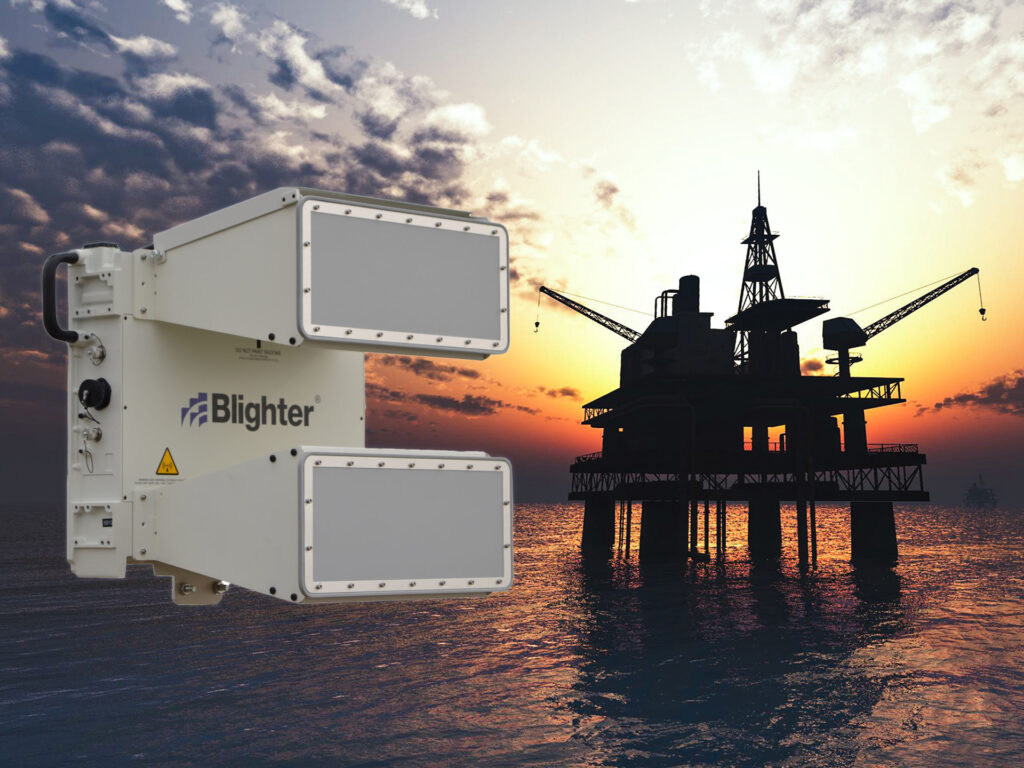
Blighter has been awarded a contract to provide its C400 series onshore and offshore installation security radars to protect a cluster of offshore oil platforms and an onshore refinery in West Africa.

Blighter has been selected to provide four C400 series e-scanning radars to provide advanced threat detection for an array of oil platforms and a refinery in West Africa, comprising three offshore platforms and an onshore refinery. The order consists of four 180° Blighter C422 radars split between the facilities which will provide coverage of the land-based perimeter and detection of inbound hostile vessels at distances of up to 20 km.

Blighter’s C400 series coastal security radars are optimised for detection of the small shallow-draught vessels favoured by pirates and militants, which sit low in the water and move at speed. The radar units are IP66-rated to provide enhanced protection against extreme marine conditions and is equipped with Blighter’s unique Sea Clutter Filter (SCF) which yields a low false alarm rate.

Blighter will provide swift delivery of the coastal threat detection array which will be operational by the end of the year, demonstrating the British SME’s agility and flexibility in meeting the customer’s unique demands after conducting a range of desktop surveillance scenarios in order to determine the best methods of protecting the facilities from pirates and other hostile actors.

Blighter radars are deployed in more than 35 countries across the world, delivering round-the-clock all-weather security protection along borders, for coastal facilities, military bases and critical national infrastructure. 

Blighter CEO Angus Hone said:

“We are pleased to have been awarded this contract, which will demonstrate the best-in-class capabilities of our C400 series onshore and offshore installation security radars in such a demanding environment. Blighter’s cutting-edge e-scan radars are well-suited to the challenges of detecting hostile vessels at sea, and providing vital early detection of threats posed to these facilities and their operators.”

About Blighter

Blighter Surveillance Systems employs 40 people and is located near Cambridge, UK. Blighter designs and manufactures world-beating 2D and 3D electronic-scanning ground-based radars, which can accurately detect drones, people, vehicles and boats at large distances.

Its radars are key sensors in surveillance and counter-drone applications, and are used in more than 35 countries around the world, delivering 24/7 security protection along national borders and coastlines, at military bases, and to protect manoeuvre force missions when deployed on military land vehicles and trailers.  Blighter’s radars also play a key role in guarding critical national infrastructure (CNI) sites such as airports, power plants and oil and gas facilities.

3CDSE 2021 features Blighter’s A800 3D Multi-Mode Radar

Cambridge, UK, November 2, 2021 – Blighter Surveillance Systems, the British designer and manufacturer of electronic-scanning radars and surveillance solutions will be showcasing the recently launched A800 3D Multi-Mode Drone Detection Radar on Stand 12a at the Three Counties Defence & Security Expo (3CDSE) in Malvern, Worcestershire, from 3 to 4 November 2021.

Taking place at the Three Counties Showground in Malvern, the theme of 3CDSE 2021 is Innovation, covering cyber security, hardware and vehicles with an emphasis on UAS and counter-UAS.  The Three Counties of Herefordshire, Worcestershire and Gloucestershire are a major hub of the UK’s defence and security industry.

Blighter’s A800 radar offers an innovative ground-based solution to threat detection, utilising multi-mode surveillance capability usually reserved only for large-scale radar systems and packaging it into a smaller, more flexible radar with a maximum range of 20 km.  The A800 3D multi-mode radar is well-suited to border and perimeter surveillance, capable of being mounted to fixed towers and masts, as well as to land vehicles and mobile surveillance trailers.

“Having already exhibited this year at DSEI in London and the World Border Security Congress in Athens, we are excited to be attending yet another live event,” said James Long, Chief Operating Officer, Blighter Surveillance Systems.  “As an agile British SME, 3CDSE 2021 provides a superb opportunity to engage with local innovators and suppliers, and to showcase the A800’s counter-UAS capabilities.”

Blighter radars are key sensors in border and perimeter surveillance and counter-drone applications, and are used in more than 35 countries around the world, delivering 24/7 security protection along national borders and coastlines, at military bases and for critical national infrastructure.

Current programmes include multiple territories with the US Department of Defense, in South Korea monitoring the demilitarised zone (DMZ), and in various European airports including London Stansted and London Gatwick providing wide area perimeter surveillance and detection of drone activity.  Most recently, Blighter was selected to provide advanced integrated B400 series target acquisition radars for a fleet of Armoured Fighting Vehicles.

A800 Radar Showcased at the World Border Security Congress

Cambridge, UK, October 4, 2021 – Blighter Surveillance Systems (‘Blighter’, www.blighter.com), the British designer and manufacturer of electronic-scanning radars and surveillance solutions will be showcasing the recently launched A800 3D Multi-Mode Drone Detection Radar on Stand 18 at the World Border Security Congress in Athens from 5 – 7 October 2021.

The World Border Security Congress is co-hosted and supported by the Greek Ministry of Migration and Asylum (www.migration.gov.gr) and is taking place in the Divani Caravel Hotel in Athens.

Blighter’s A800 radar (www.blighter.com/a800) offers an innovative ground-based solution to threat detection, utilising multi-mode surveillance capability usually reserved only for large-scale radar systems and packaging it into a smaller, more flexible radar with a maximum range of 20km. The A800 3D multi-mode radar is ideally suited to border and perimeter surveillance, capable of being mounted to fixed towers and masts, as well as to land vehicles and mobile surveillance trailers.

World Border Security Congress Technology Workshops

Roy Cummings, International Sales Manager at Blighter will also be giving an address during the Technology Workshop on Wednesday 6th at the show, to discuss the role that advanced radar must play in keeping borders secure.

“After a successful run at DSEI, we are excited to be able to exhibit in-person once again,” said Angus Hone, Chief Executive Officer, Blighter Surveillance Systems. “As a company that specialises in border security and threat detection, the World Border Security Congress will provide an excellent opportunity to showcase the capabilities of the A800 and engage with industry partners and customers to discuss the latest innovations in border security challenges.”

Blighter radars are key sensors in border and perimeter surveillance and counter-drone applications, and are used in more than 35 countries around the world, delivering 24/7 security protection along national borders and coastlines, at military bases and at critical national infrastructure sites.

Current activities include multiple programmes for the US Department of Defense, in South Korea monitoring the demilitarised zone (DMZ), and in various European airports including London Heathrow and London Stansted, providing wide area perimeter surveillance and detecting drone activity. Most recently, Blighter was selected to provide advanced integrated B400 series target acquisition radars for a fleet of Armoured Fighting Vehicles.

ENDS

For media enquiries please contact:

Gus Haynes (for Blighter)
Tel: +44 7858 101117

Email: [email protected]

High resolution images of the A800 3D Multi-Mode Drone Detection Radar:

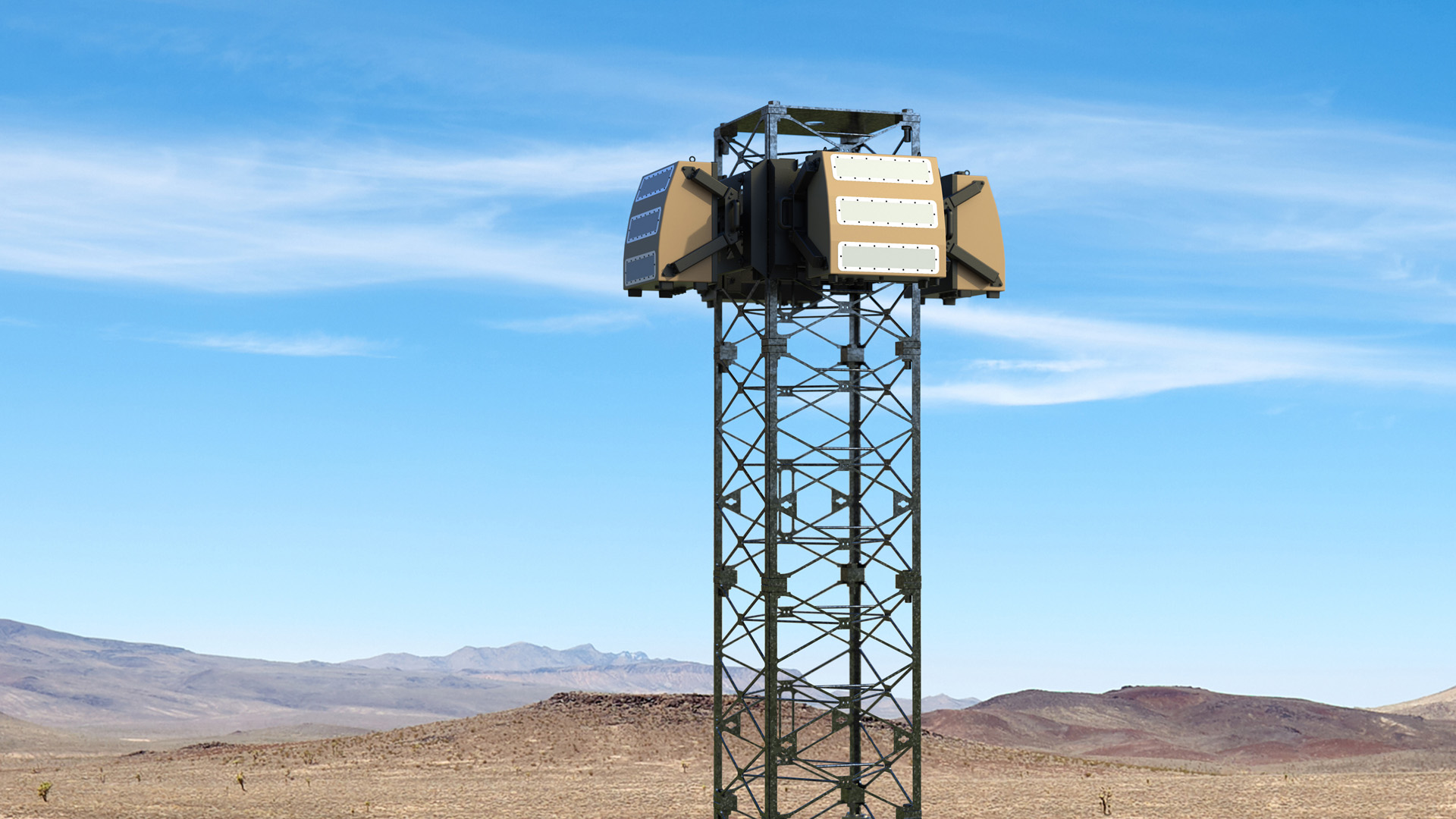
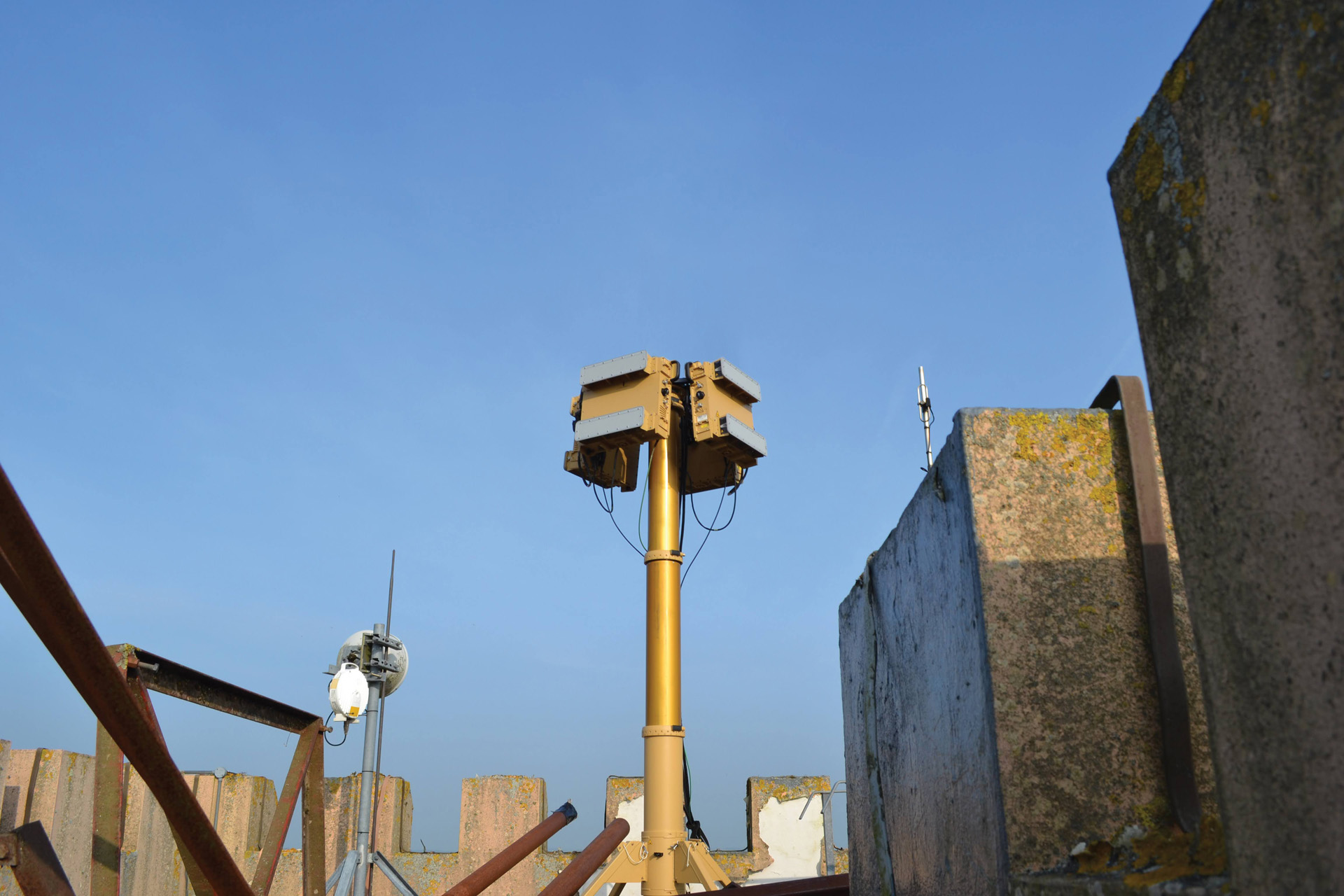
A800 3D Multi-Mode Drone Detection Radar on Tower in Desert #1
A800 3D Multi-Mode Drone Detection Radar on Tower in Desert #2

About Blighter (www.blighter.com):

Blighter Surveillance Systems employs 40 people and is located near Cambridge, UK. Blighter designs and manufactures world-beating 2D and 3D electronic-scanning ground-based radars, which can accurately detect drones, people, vehicles and boats at large distances.

Its radars are key sensors in surveillance and counter-drone applications and are used in more than 35 countries around the world, delivering 24/7 security protection along national borders and coastlines, at military bases, and to protect manoeuvre force missions when deployed on military land vehicles and trailers.  Blighter’s radars also play a key role in guarding critical national infrastructure (CNI) sites such as airports, power plants and oil and gas facilities.

Anti-Drone Radar Technology to Counter Drone Threats

  • The Global Proliferation of Drone Threats and the Role of Anti-Drone Radar

In June, bomb blasts threatened security at the Indian Air Force Station in Jammu, northern India, as a low-flying drone dropped Improvised Explosive Devices (IEDs) within the air base in what is believed to be the country’s first drone attack on a military facility (Source: The Economic Times).  This drone attack has stimulated debate in India about the risks of further attacks on military bases or civilian facilities, such as airports and crowded public places, where future deployment of anti-drone radar technology could play a key role.

Drones are being used for an ever-increasing range of illicit activities including carrying payloads that could be used for reconnaissance and armed attacks, both within and outside military conflict zones.  There is now significant growth in the use of commercial drones for destructive purposes, and such drone activities have severe humanitarian repercussions for civilians.

According to research, in 2019 there are around six hundred thousand uncontrolled drones of all sizes and capabilities in India, all with the potential to be exploited by extremist or criminal entities to carry out illegal activities.

Photo: Example of an Anti-Drone Radar System

This has highlighted the critical importance for nations to invest in anti-drone radar capability as drone threats proliferate globally and evolve. India has been working hard to acquire anti-drone technology and recent reports indicate that the Indian Air Force is now inviting responses from domestic and international suppliers for counter-drone systems for the Indian Security Forces.  But in the current rapidly evolving threat environment where small commercially available drones are being used to carry small payloads, there are challenges which need to be addressed when selecting such a system.

Small drones have a relatively small radar signature and are difficult to detect.  They are easily available, low cost and there is no control over their proliferation. And they can be readily modified and adapted for disruptive and illicit activities.  Accurate and rapid drone detection, identification and classification are key capabilities in any counter-drone system.

Anti-drone radar detection solutions work most effectively when they are correctly designed, implemented, and integrated with the security response capability of the facility being protected.  Their capacity to deal with multiple simultaneous or overlapping incidents in different parts of the facility, and the effectiveness of systems classifying the threat, so that the appropriate response can be deployed in time to be of benefit are critical design considerations.

There are at least as many (if not more) nefarious uses for drone technology as there are legitimate and lawful applications, and in many instances the behaviours typical of illicit use will be indistinguishable from those typical of benign use.  This makes the challenge of classifying ‘good’ and ‘rogue’ drones more complex, raising the potential for erroneous and defamatory accusations against lawful and legitimate drone operators.

Multi-mode radars (see our white paper) provide one of the most effective solutions for border security and drone detection.  They offer a reliable and affordable way to cover the large areas, scanning air, land and water simultaneously and detecting small and slow threats in each domain alongside traditional threats, including drones.  They operate at long range and in all visibility conditions, detecting targets near to the ground and in cluttered environments such as in towns or around airports and military bases

Improvements are continually being made in anti-drone radar technologies so that they are more sensitive and able to distinguish with increasing accuracy, drone activities from other non-threatening operations.  Together with the application of artificial intelligence and machine learning, this reduces false alarm rates by applying typical threat data and using this to build a much more capable and intelligent incident response solution.

The entire drone and anti-drone sector is only in its earliest of stages, and there are going to be many changes in the next few years as technology evolves, as legislation matures and as the fundamental commercial drivers that need to underpin the businesses that exploit this technology continue to be tested in the real world.

Anti-Drone Radar Products & Counter-UAS Systems from Blighter Surveillance Systems

A800 3D Multi-Mode Radar at DSEI 2021

  • Blighter to showcase A800 3D multi-mode radar at DSEI 2021

Cambridge, UK, August 3, 2021 – Blighter Surveillance Systems (‘Blighter’, www.blighter.com) the British designer and manufacturer of electronic-scanning radars and surveillance solutions, will be showcasing its innovative A800 3D multi-mode drone detection radar at DSEI 2021.  DSEI is taking place from Tuesday 14th September to Friday 17th September at the ExCeL exhibition centre in London. Blighter will be displaying its equipment on Stand H2-866 in the ADS Group UK Pavilion.

Blighter’s A800 radar offers an innovative ground-based solution to threat detection, utilising multi-mode surveillance capability usually reserved only for large-scale radar systems and packaging it into a smaller, more flexible radar with a maximum range of 20km.  The A800 3D multi-mode radar is ideally suited to border and perimeter surveillance, capable of being mounted to fixed towers and masts, as well as to land vehicles and mobile surveillance trailers. This will be the first time that the A800 will be available to view in person.

As with the majority of industry, Blighter’s appearance at DSEI will be their first in-person event in over a year, and it follows a year of exciting developments for the Cambridgeshire-based SME.  Recently, Blighter cemented its position in South Korea by affirming its partnership with South Korean integration and certification firm Dt&C (www.dtnc.co.kr), a relationship which has been a vital part of Blighter’s consolidation of its position in the South Korean market.

Blighter Co-Founder and CTO Mark Radford gave a presentation to the first C-UAS Industry Action Group established by the UK Home Office’s Joint Security and Resilience Centre (JSaRC), offering his insight into the role of radar in C-UAS and highlighting the importance of information sharing between C-UAS providers and Government. Mark’s whitepaper on the capabilities of Blighter’s innovative multi-mode radar was also published, explaining the advantages conferred by the A800 3D multi-mode radar.

Most recently, Blighter was selected to provide advanced integrated B400 series target acquisition radars for a fleet of Armoured Fighting Vehicles, demonstrating the company’s agility in providing the versatile systems required for such a demanding and mobile role, and in July Blighter’s US partner JGW Group also delivered demonstrations of the highly mobile A400 series radars’ ability to detect and track sUAS targets.

Angus Hone, CEO of Blighter Surveillance Systems said:

“We are excited to showcase our best-in-class Ground Surveillance Radars at our stand in the ADS Group UK Pavilion. We are looking forward to displaying our cutting-edge A800 3D multi-mode radar which will be available to view in person for the first time and we will be on-hand to brief stakeholders on its detection capabilities.”

ENDS

To arrange interviews at DSEI please contact Gus Haynes below.

For media enquiries please contact:

Gus Haynes (for Blighter)
Tel: +44 7858 101117
Email: [email protected]

High resolution media photos of A800 3D Multi-Mode Radar:

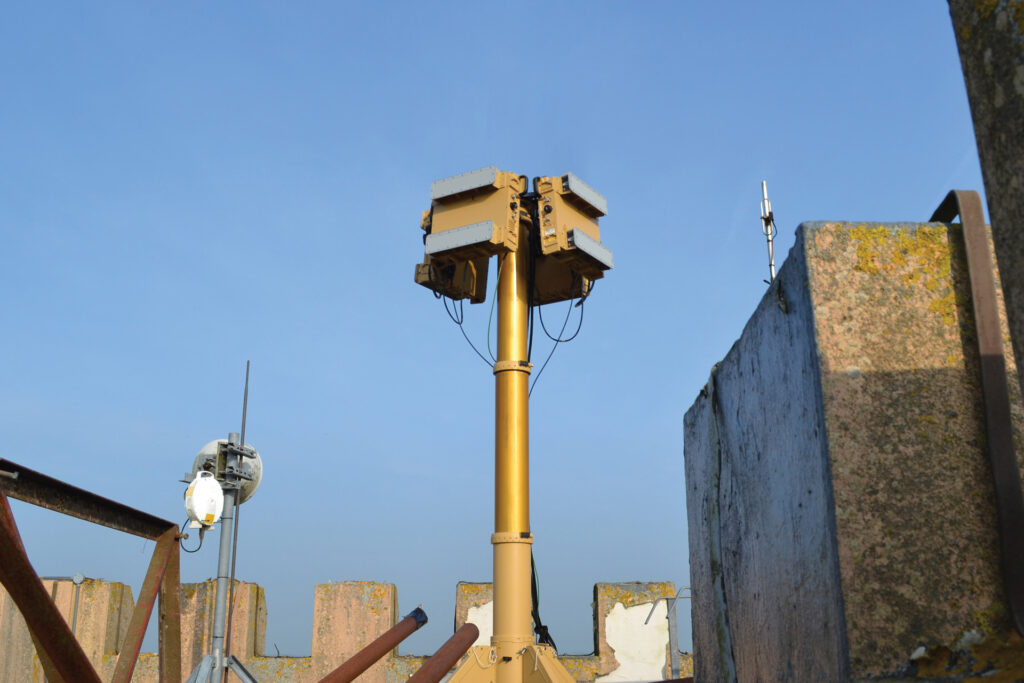
A800 3D Multi-Mode Radar on Tripod

About Blighter (www.blighter.com)

Blighter Surveillance Systems employs 40 people and is located near Cambridge, UK. Blighter designs and manufactures world-beating 2D and 3D electronic-scanning ground-based radars, which can accurately detect drones, people, vehicles and boats at large distances.

Its radars are key sensors in surveillance and counter-drone applications, and are used in more than 35 countries around the world, delivering 24/7 security protection along national borders and coastlines, at military bases, and to protect manoeuvre force missions when deployed on military land vehicles and trailers.  Blighter’s radars also play a key role in guarding critical national infrastructure (CNI) sites such as airports, power plants and oil and gas facilities.

Target Acquisition Radars for Fleet of Armoured Fighting Vehicles

  • Blighter selected to provide advanced integrated target acquisition radars for fleet of Armoured Fighting Vehicles

Cambridge, UK, July 23, 2021 – Blighter Surveillance Systems (‘Blighter’, www.blighter.com) the British designer and manufacturer of electronic-scanning radars and surveillance solutions, has been selected to provide a minimum of 25 target acquisition radars for a fleet of Armoured Fighting Vehicles (AFVs).

The initial contract with a major European defence company will last for approximately 3-5 years, with the possibility to extend, and provide a minimum of another 60 radars in the following phase.

Blighter B400 series target acquisition radars, set to be integrated with the defensive capabilities of this fleet, provide long-range, targeting capability for the weapons system and are already in use across the world, including as part of an integrated mobile border security platform deployed in Europe.

The B400 radars are versatile by design, and suited to fixed, mobile and portable applications. With extensive defensive and offensive capabilities, the vehicles will be dependent on the accuracy of the target acquisition radars to achieve full operational effectiveness.

Angus Hone, CEO of Blighter Surveillance Systems said:

“In an increasingly kinetic environment it is essential that armed forces personnel have full situational awareness and tracking capabilities. Blighter is uniquely positioned to provide the versatile system that is required for this role and pleased to now extend our products to this new and innovative programme of AFVs”.

Blighter is due to exhibit its range of electronic-scanning ground surveillance, coastline security, drone security and target acquisition radars on stand H2-866 at the upcoming DSEI exhibition in London.  DSEI 2021 takes place from Tuesday 14th to Friday 17th September at the ExCeL exhibition centre.

ENDS

High Resolution Media Photo:

Blighter B400 Series Target Acquisition Radars with Camera on Vehicle Mast – Landscape
Blighter B400 Series Target Acquisition Radars with Camera on Vehicle Mast – Portrait

For media enquiries please contact:

Victoria Mackarness (for Blighter)
Tel: +44 (20) 7866 2487

Email: [email protected]

To arrange interviews at DSEI please contact Victoria Mackarness on the above.

About Blighter (www.blighter.com)

Blighter Surveillance Systems employs 40 people and is located near Cambridge, UK. Blighter designs and manufactures world-beating 2D and 3D electronic-scanning ground-based radars, which can accurately detect drones, people, vehicles and boats at large distances.

Its radars are key sensors in surveillance and counter-drone applications, and are used in more than 35 countries around the world, delivering 24/7 security protection along national borders and coastlines, at military bases, and to protect manoeuvre force missions when deployed on military land vehicles and trailers.  Blighter’s radars also play a key role in guarding critical national infrastructure (CNI) sites such as airports, power plants and oil and gas facilities.

Border Security White Paper Published

Blighter’s new national border security white paper has just been published.  The document is available as a downloadable PDF

National Border Security White Paper Overview

Many of the world’s nations have concerns about national border security and in particular, people entering their country either to live and work there, or smuggle in illegal goods. At official border crossings, substantial fences and formal security controls provide adequate protection, however in remote areas, the cost of providing and maintaining effective physical barriers is excessive.

A nation’s borders are one of its primary defences against a range of threats, but they also have a number of vulnerabilities that can be exploited for criminal gain, illegal migration or terrorist activity.

The integrity of the physical border remains critical, particularly in areas with long land or sea borders. These vulnerable frontiers can be enhanced by using technological innovations such as infrared sensors, heat-sensing cameras, unmanned aerial vehicles, and radar and satellite surveillance. Countries are also co-operating along shared borders to increase the breadth of coverage.

Advancements in e-scanning radar capabilities mean that they are being used as the primary detection sensor for long-range remote surveillance systems where the ability to detect slow moving targets, even in complex mountainous terrain, makes them the ideal solution for the remote surveillance and detection of vehicles, people and even crawlers trying to cross borders illegally.

About the Author

Mark Radford is the technical Co-Founder and Chief Technology Officer (CTO) of Blighter Surveillance Systems Ltd.

Mark has worked in the radar industry since 1985, initially as a designer of high-performance signal processing solutions for naval radar systems and later as a system designer and development manager.  Since moving to Cambridge, UK, in 2000, Mark has been involved in various radar development projects including the specification, design and development of the Blighter radar family, unique electronic-scanning FMCW Doppler surveillance radars.

Since his appointment as CEO of Blighter Surveillance Systems in 2013, Mark has overseen developments of the Blighter technology to enhance it for use in more complex environments such as the heavily cluttered operational areas of airports where buildings and airport traffic limit the effectiveness of traditional perimeter security radars.  Further enhancements now see Blighter radars being used for coastal security and for air security, where Blighter’s ability to detect very small and slow-moving targets in heavily cluttered environments is a key technological advantage.  Mark first developed the AUDS (Anti-UAV Defence System) counter-drone system in 2014, which is now the principal Short-Range Air Defence (SHORAD) system used by US DoD in their warfighting efforts and is in operational use at leading UK Airports.

Mark headed the spin-out of Blighter Surveillance Systems Ltd. from its parent company in 2015 to enable rapid business growth and in March 2019 resumed his technology leadership position for Blighter by appointment to ‘Co-Founder and CTO’.