Short Range Air Defence White Paper Published

Blighter’s new white paper on Short Range Air Defence has just been published. It is the latest in Blighter’s series of white papers which cover topics such as National Border Security and Multi-Mode Radar.

The document is available as a downloadable PDF or can be read as an article here.

As modern warfare changes with the growth in stealthy, and agile threats, countries are investing increasingly in their national security and the development of air defence systems. These are used to take defensive measures to counter incoming hostile aerial threats such as ground attack fighter aircraft, missiles and uncrewed aircraft systems (UAS). Air defence systems act as counter-weapon systems for all air threats and are also used for operations such as airspace surveillance using radars and electro-optic sensors.

Missile threats have been addressed with very capable systems, but there is now a prevalence of smaller threats such as UAS and drones to exploit potential gaps in air defence.

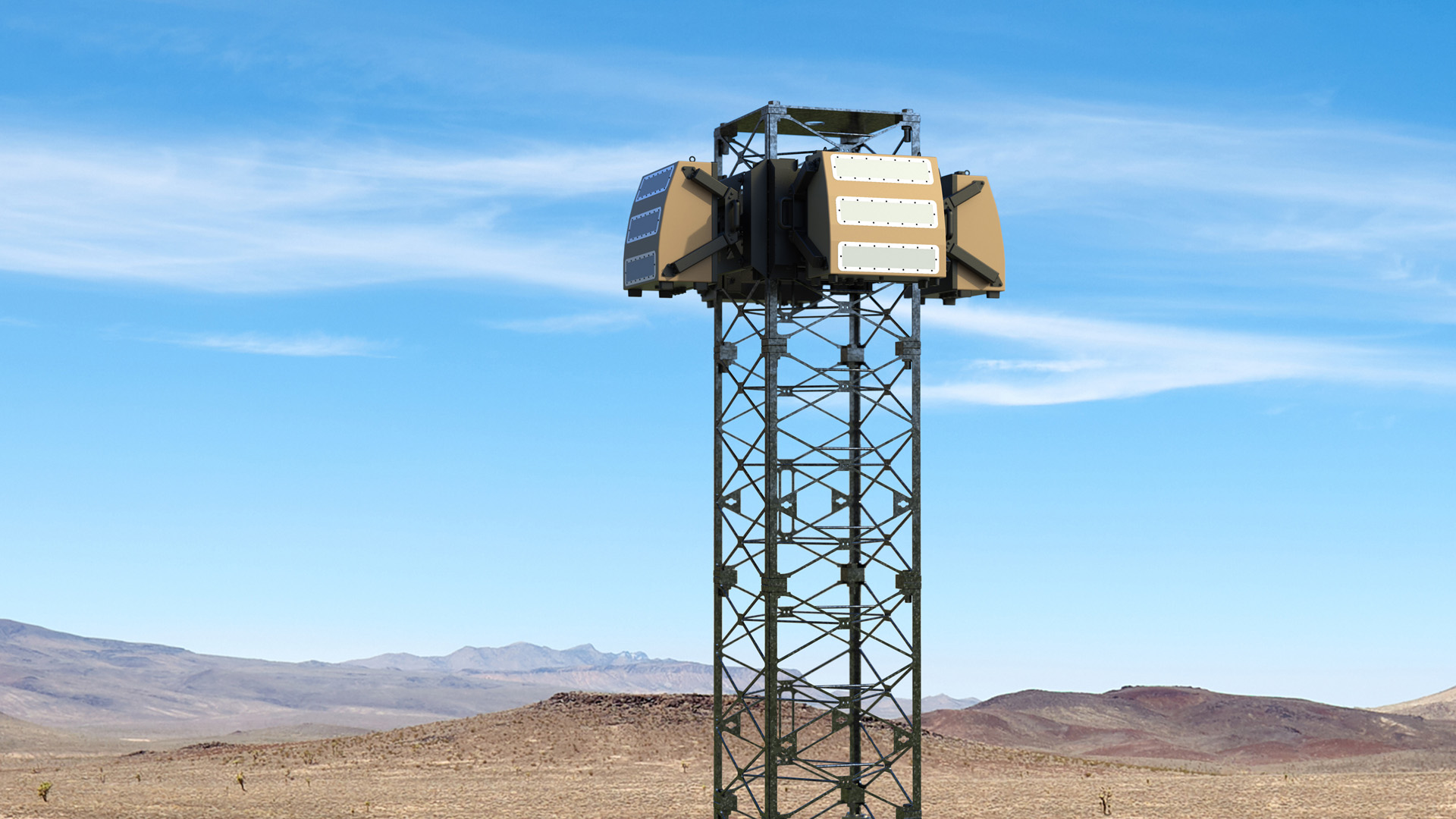
Short Range Air Defence systems comprise a collection of sensors that typically includes multiple radar and RF sensors. But it can also incorporate electro-optical devices such as cameras or laser rangefinders. In addition, it includes either a C2 or C4I system to communicate between the various elements and the command-and-control system, and also effectors, kinetic weapons, missiles, or, more recently, directed energy weapons.

Radar sensors for threat detection and identification are at the heart of SHORAD systems. They are the principal all weather sensor and are often supported by electro-optic devices to provide precise angle measurements of aerial targets. Critical to the success of any SHORAD system is the ability for all the component parts of the system to be integrated together and in turn to be integrated within the battlefield communications system.

About the Author – Barry Wade

A mathematics graduate, Barry has accumulated over 30 years of experience in the radar industry, gained while working for Plessey Radar, GEC Marconi Radar and Defence Systems, BAE Systems, Kelvin Hughes, AMS Group and Blighter Surveillance Systems. Internationally recognised, he has held senior positions, in excess of ten years at director/vice president level, in the development of numerous air defence, fire control, weapon location and navigation radar systems. While at Blighter Surveillance Systems Barry has applied his knowledge of Active Electronically Steered Array Radar, advanced signal processing and non-cooperative target recognition to the development of a new family of short range radars. In 2011 he was presented with a prestigious Navigation Award by His Royal Highness the Duke of Edinburgh for Technical Achievement from the Council of the Royal Institute of Navigation (RIN) for his work in leading the design of the SharpEye™ radar. He has chaired sessions at international radar conferences and regularly reviews radar related papers for learned journals. His principal interest is in radar signal processing and has published several papers on this topic.

Border Security White Paper Published

Blighter’s new national border security white paper has just been published.  The document is available as a downloadable PDF

National Border Security White Paper Overview

Many of the world’s nations have concerns about national border security and in particular, people entering their country either to live and work there, or smuggle in illegal goods. At official border crossings, substantial fences and formal security controls provide adequate protection, however in remote areas, the cost of providing and maintaining effective physical barriers is excessive.

A nation’s borders are one of its primary defences against a range of threats, but they also have a number of vulnerabilities that can be exploited for criminal gain, illegal migration or terrorist activity.

The integrity of the physical border remains critical, particularly in areas with long land or sea borders. These vulnerable frontiers can be enhanced by using technological innovations such as infrared sensors, heat-sensing cameras, unmanned aerial vehicles, and radar and satellite surveillance. Countries are also co-operating along shared borders to increase the breadth of coverage.

Advancements in e-scanning radar capabilities mean that they are being used as the primary detection sensor for long-range remote surveillance systems where the ability to detect slow moving targets, even in complex mountainous terrain, makes them the ideal solution for the remote surveillance and detection of vehicles, people and even crawlers trying to cross borders illegally.

About the Author

Mark Radford is the technical Co-Founder and Chief Technology Officer (CTO) of Blighter Surveillance Systems Ltd.

Mark has worked in the radar industry since 1985, initially as a designer of high-performance signal processing solutions for naval radar systems and later as a system designer and development manager.  Since moving to Cambridge, UK, in 2000, Mark has been involved in various radar development projects including the specification, design and development of the Blighter radar family, unique electronic-scanning FMCW Doppler surveillance radars.

Since his appointment as CEO of Blighter Surveillance Systems in 2013, Mark has overseen developments of the Blighter technology to enhance it for use in more complex environments such as the heavily cluttered operational areas of airports where buildings and airport traffic limit the effectiveness of traditional perimeter security radars.  Further enhancements now see Blighter radars being used for coastal security and for air security, where Blighter’s ability to detect very small and slow-moving targets in heavily cluttered environments is a key technological advantage.  Mark first developed the AUDS (Anti-UAV Defence System) counter-drone system in 2014, which is now the principal Short-Range Air Defence (SHORAD) system used by US DoD in their warfighting efforts and is in operational use at leading UK Airports.

Mark headed the spin-out of Blighter Surveillance Systems Ltd. from its parent company in 2015 to enable rapid business growth and in March 2019 resumed his technology leadership position for Blighter by appointment to ‘Co-Founder and CTO’.

New Multi-Mode Radar White Paper Published

Blighter’s new multi-mode radar white paper has just been published.  The document is available to download and read as a PDF from this link: PDF of New White Paper.

Multi-Mode Radar White Paper Overview

Traditional surveillance radars have been defined by their radar architecture and mechanical construction, resulting in application specific radar designs:

    • Ground surveillance radar
    • Air traffic control radar
    • Coastal vessel tracking system (VTS) radar

The advancement of radar technology including availability of low-cost electronic scanning antennas, high capability and easily programmable signal processing platforms, and high-quality digital waveform generators, allows modern radars to do so much more than their predecessors. Yet, the majority of radars on the market presently offer only single mode operation or attempt to apply modes for one application directly to another application despite differences in target type and radar environments. However, there are radars now becoming available that offer the operation of all three modes, for air, ground and water, simultaneously. These multi-mode radars were once only available in multi-million pound military systems, but are now available at a fraction of these costs.

About the Author

Mark Radford is the technical Co-Founder and Chief Technology Officer (CTO) of Blighter Surveillance Systems Ltd. Mark has worked in the radar industry since 1985, initially as a designer of high-performance signal processing solutions for naval radar systems and later as a system designer and development manager. Since moving to Cambridge, UK, in 2000, Mark has been involved in various radar development projects including the specification, design and development of the Blighter radar family, unique electronic-scanning FMCW Doppler surveillance radars.

Since his appointment as CEO of Blighter Surveillance Systems in 2013, Mark has overseen developments of the Blighter technology to enhance it for use in more complex environments such as the heavily cluttered operational areas of airports where buildings and airport traffic limit the effectiveness of traditional perimeter security radars. Further enhancements now see Blighter radars being used for coastal security and for air security, where Blighter’s ability to detect very small and slow-moving targets in heavily cluttered environments is a key technological advantage. Mark first developed the AUDS (Anti-UAV Defence System) counter-drone system in 2014, which is now the principal Short-Range Air Defence (SHORAD) system used by US DoD in their warfighting efforts and is in operational use at leading UK Airports.

Mark headed the spin-out of Blighter Surveillance Systems Ltd. from its parent company in 2015 to enable rapid business growth and in March 2019 resumed his technology leadership position for Blighter by appointment to ‘Co-Founder and CTO’.

Read more here: PDF of New White Paper

Updated Feature Note Published – Radar Technology 101

Continue your Professional Development with Blighter’s series of CPD Certified Training Modules, each of which is intended to furnish delegates with the most important facts and figures they need to provide guidance and basic competence in the covered subject matter.

RADAR

Participate in a quick-start guide to RADAR technology, it’s history and operation with a specific slant towards the popular Doppler FMCW variants and their use in perimeter protection and wide area surveillance applications.

Learn what to expect from RADAR as a sensor and where these advantages are most appropriately exploited to provide dependable, long range, all weather detection of targets.

Read more by clicking the image below (or click here).

Contact [email protected] to schedule for groups of 4 or more.

Updated Feature Note Published – Dynamic Virtual Perimeters

Whether it’s because your site is growing or changing, or because the needs of your operation vary on a frequent basis, hard physical perimeters don’t always remain in the same place. Blighter’s Dynamic Virtual Perimeter functionality enable you to adapt your perimeter protection needs to the changing requirements of your site.

Sustainable Operations

Establishing and maintaining perimeters on sites with evolving needs can be costly and highly disruptive. By using Dynamic Virtual Perimeters, wide area sensors can be installed once and then reconfigured as the perimeters change without needing to do anything other than change some software settings.

Automated Scenarios

Remove the dependence on operators to enforce complex access rules as site conditions change by programming Dynamic Virtual Perimeters to be controlled in software, by time profiles, external triggers or whatever set of rules you need to suit your workflow.

Click the image below (or here) to open the PDF and read more.


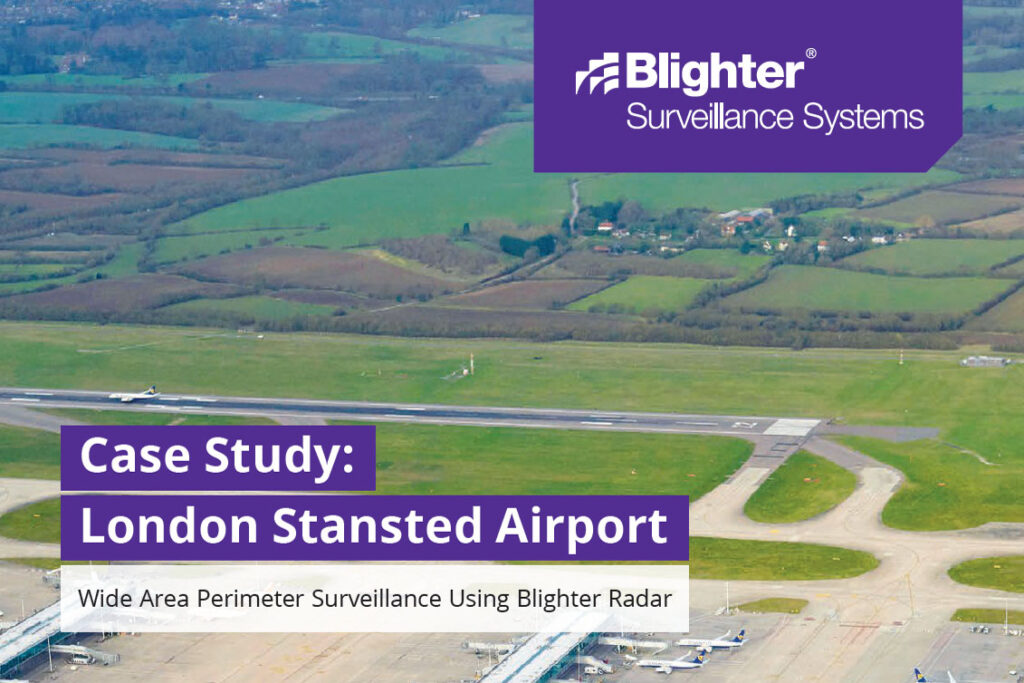
New Case Study – London Stansted Airport

It is easy to talk about the possible applications for radar at airports, but Blighter Surveillance Systems Ltd have real world deployments and proven solutions delivering operational benefit to end users internationally.

Click here to take a look at this case study from London Stansted Airport produced in conjunction with the team at STANLEY Security for an example of how our wide area detection capabilities are providing multi-functional protection at one of the UKs busiest airports.


White Papers Revised

The Airport Security and Coastal & Harbour Security White Papers have recently been updated.

The updated documents are available from the Document Library, in the Support section, or click the image below.